GIS user technology news

News, Business, AI, Technology, IOS, Android, Google, Mobile, GIS, Crypto Currency, Economics

  • Advertising & Sponsored Posts
    • Advertising & Sponsored Posts
    • Submit Press
  • PRESS
    • Submit PR
    • Top Press
    • Business
    • Software
    • Hardware
    • UAV News
    • Mobile Technology
  • FEATURES
    • Around the Web
    • Social Media Features
    • EXPERTS & Guests
    • Tips
    • Infographics
  • Blog
  • Events
  • Shop
  • Tradepubs
  • CAREERS
You are here: Home / News / Earth Imagery / First images from SPOT 7 satellite within three days after launch

First images from SPOT 7 satellite within three days after launch

July 5, 2014 By Editor

First images from SPOT 7 satellite within three days after launch — SPOT 6/SPOT 7 constellation in place now, designed for unparalleled high-resolution national coverage

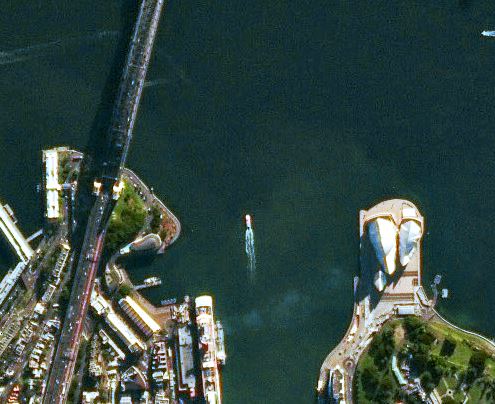
Airbus Defence and Space has published the first images obtained from the SPOT 7 satellite, a mere three days after its launch on 30 June. Over the last few hours, the entire chain – from satellite programming and image acquisition to telemetry reception and processing – was successfully put into operation to deliver these first spectacular images. These images show highly diverse landscapes, revealing SPOT 7’s full potential in terms of natural resource and urban zone mapping and agri-environmental monitoring.


The SPOT 6/7 constellation is now in place and considerably improves the capabilities and performance offered by SPOT 5, which has been in operation since 2002 and which is scheduled to be decommissioned from commercial service during the first quarter of 2015. This new constellation offers a higher resolution, greater programming reactivity and a much higher volume of images acquired daily (in monoscopic or stereoscopic mode).


SPOT 6 and SPOT 7 mark the dawning of a new era for the SPOT family in forming a constellation of high-resolution Earth observation satellites phased at 180° in the same orbit. This means that each point on the globe can be revisited on a daily basis and wide areas covered in record time, all with an unparalleled level of precision. With both satellites in orbit, acquisition capacity will be boosted to six million square kilometres per day – an area ten times the size of France.


With the very-high-resolution twin satellites Pléiades 1A and 1B, SPOT 6 and now SPOT 7, Airbus Defence and Space’s optical satellite constellation will offer the company’s customers a high level of detail across wide areas, a highly reactive image programming service and unique surveillance and monitoring capabilities.


For more information on SPOT 7: www.geo-airbusds.com/
 

spot 7 imagery 

Portion of SPOT 7 image – Sydney, Australia Harbor

Filed Under: Earth Imagery Tagged With: First images from SPOT 7 satellite within three days after launch, News, R/S & Earth Imaging

Editor’s Picks

Unlocking your Location Data History on Social Media

Hardware Spotlight – HP Z240 SFF Turbo Workstation

Yellowstone’s Thermal Springs — Their Colors Unveiled

DigitalGlobe Top Images from 2014 – The fourth annual Top Image contest

See More Editor's Picks...

About Editor

Glenn is a geographer and a GIS professional with over 20 years experience in the industry. He's the co-founder of GISuser and several other technology web publications.

Recent Industry News

The First 90 Days Tell the Truth: What Hospitality Fitouts Reveal After Opening

March 27, 2026 By GISuser

Beyond the Blur: How Frosted Glass Film Is Quietly Redefining Modern Melbourne Spaces

March 27, 2026 By GISuser

The Early Build Decisions That Quietly Shape Life in Your Home Years Later

March 27, 2026 By GISuser

The Complete Guide to Buying Xxxxxxxxl Size Cxx Clothing: Fit, Comfort and Style Tips 

March 16, 2026 By GISuser

Hot News

State of Data Science Report – AI and Open Source at Work

HERE and AWS Collaborate on New HERE AI Mapping Solutions

Virtual Surveyor Adds Productivity Tools to Mid-Level Smart Drone Surveying Software Plan

Categories

Copyright gletham Communications 2015 - 2026

Go to mobile version