GIS user technology news

News, Business, AI, Technology, IOS, Android, Google, Mobile, GIS, Crypto Currency, Economics

  • Advertising & Sponsored Posts
    • Advertising & Sponsored Posts
    • Submit Press
  • PRESS
    • Submit PR
    • Top Press
    • Business
    • Software
    • Hardware
    • UAV News
    • Mobile Technology
  • FEATURES
    • Around the Web
    • Social Media Features
    • EXPERTS & Guests
    • Tips
    • Infographics
  • Blog
  • Events
  • Shop
  • Tradepubs
  • CAREERS
You are here: Home / * PRESS / Earth Imaging - Remote Sensing / Earth Observatory – NASA and A Satellite View of River Width

Earth Observatory – NASA and A Satellite View of River Width

July 11, 2015 By GISuser

This from NASA.. Traditionally, hydrologists have estimated the width of rivers by examining topographic maps and backing out calculations from the amount of river discharge measured at certain points along the watershed.

A Satellite View of River Width (Image: NASA)

A Satellite View of River Width (Image: NASA)

While this approach offers a ballpark estimate, other factors—such as the cohesive strength of the sediment in a river’s banks or the presence of dams—can throw such estimates off significantly.

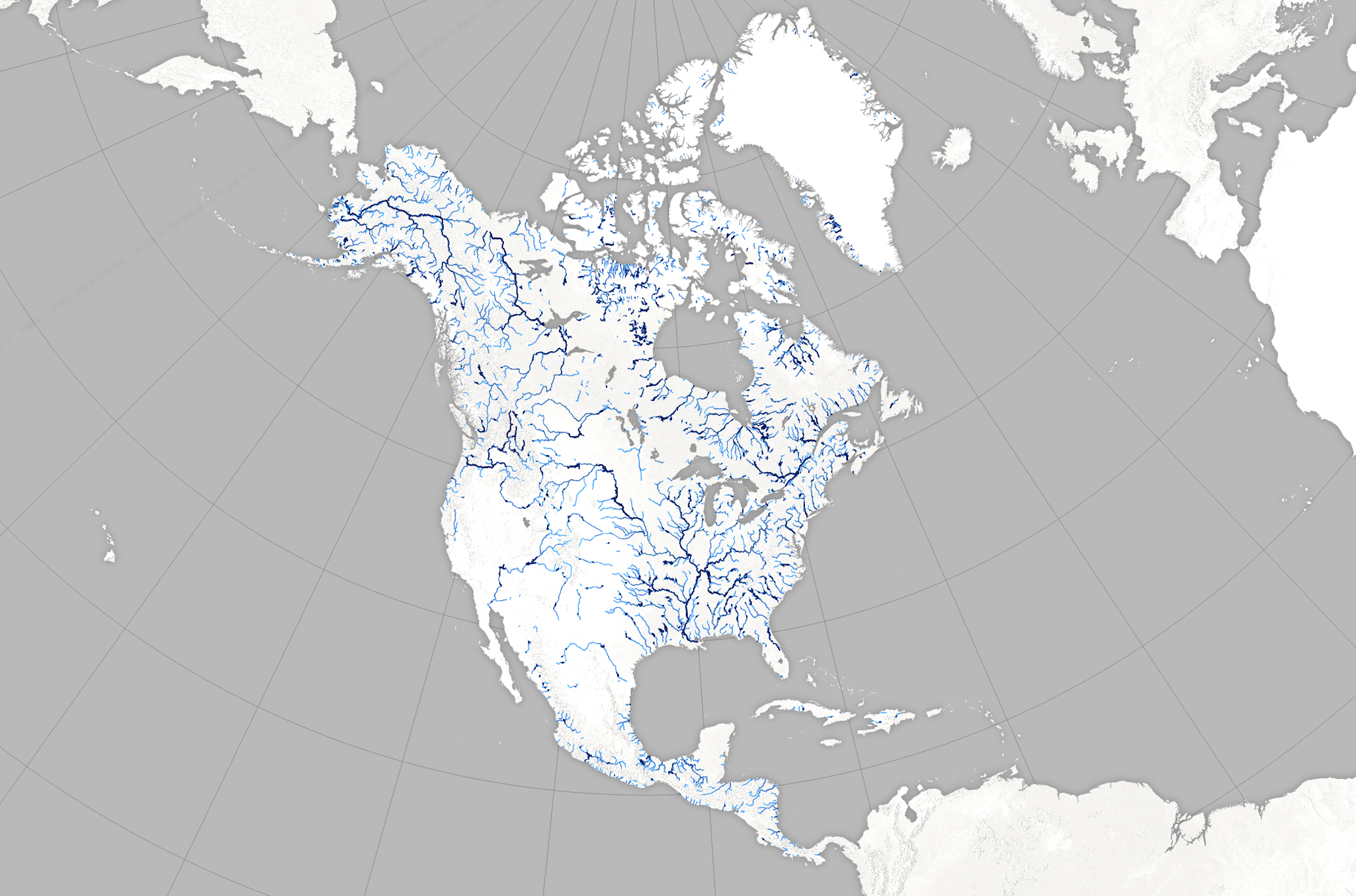
Now hydrologists from the University of North Carolina have come up with an innovative way to estimate the size of rivers via satellite images. Combing through data acquired by Landsat satellites, George Allen and Tamlin Pavelsky have compiled a new database of river widths for North America. The database was created from a collection of 1,756 Landsat images with minimal cloud cover and rivers free of ice cover. To minimize the influence of seasonal changes, all images were selected for times when each river had its annual average discharge. Allen and Pavelsky then ran all of the images through a software program that automatically locates the center line and edges of a river.

The result is the continental scale map of river widths, shown at the top of this page. Width is depicted with shades of blue, with wider rivers appearing darker and thinner rivers appearing lighter. The first closeup below shows the Mississippi and other rivers in the southern United States. The second closeup shows a very remote portion of the Canadian Arctic, northwest of Hudson Bay. For a closer view of the entire continent, download and explore the large version of the map.
Continue Reading

Filed Under: Earth Imaging - Remote Sensing, Top Features, Top Press Tagged With: Earth Observatory, NASA

Editor’s Picks

Keep the UAV Devices Away – Create and Register Your Own No Fly Zone

Boulder County Launches New Geospatial Open Data Platform

Where’s the Cheap Gas? The GasBuddy HeatMap Can Tell You

Reading – Reduce Your Open Source Security Risk

See More Editor's Picks...

Recent Industry News

Aerial Surveys Int’l and Global Marketing Insights to Present GEOINT 2026 Workshop on Multi-Domain Geospatial Fusion for Automated Infrastructure Monitoring

April 24, 2026 By GISuser

Why Timing Matters More Than You Think With Spray Seal (And Why People Often Get It Slightly Wrong)

April 22, 2026 By GISuser

The Quiet Planning Stage Most People Don’t See When Building a Pool in Brisbane

April 22, 2026 By GISuser

Best Equipment Labels for Industrial Use: Ranked Systems That Survive Real-World Conditions

April 17, 2026 By GISuser

Hot News

State of Data Science Report – AI and Open Source at Work

HERE and AWS Collaborate on New HERE AI Mapping Solutions

Virtual Surveyor Adds Productivity Tools to Mid-Level Smart Drone Surveying Software Plan

Categories

Copyright gletham Communications 2015 - 2026

Go to mobile version