
For 2021, a likely range of 13 to 20 named storms (winds of 39 mph or higher), of which 6 to 10 could become hurricanes (winds of 74 mph or higher), including 3 to 5 major hurricanes (category 3, 4 or 5; with winds of 111 mph or higher) is expected. NOAA provides these ranges with a 70% confidence. The Atlantic hurricane season extends from June 1 through November 30.
“Now is the time for communities along the coastline as well as inland to get prepared for the dangers that hurricanes can bring,” said Secretary of Commerce Gina Raimondo. “The experts at NOAA are poised to deliver life-saving early warnings and forecasts to communities, which will also help minimize the economic impacts of storms.”
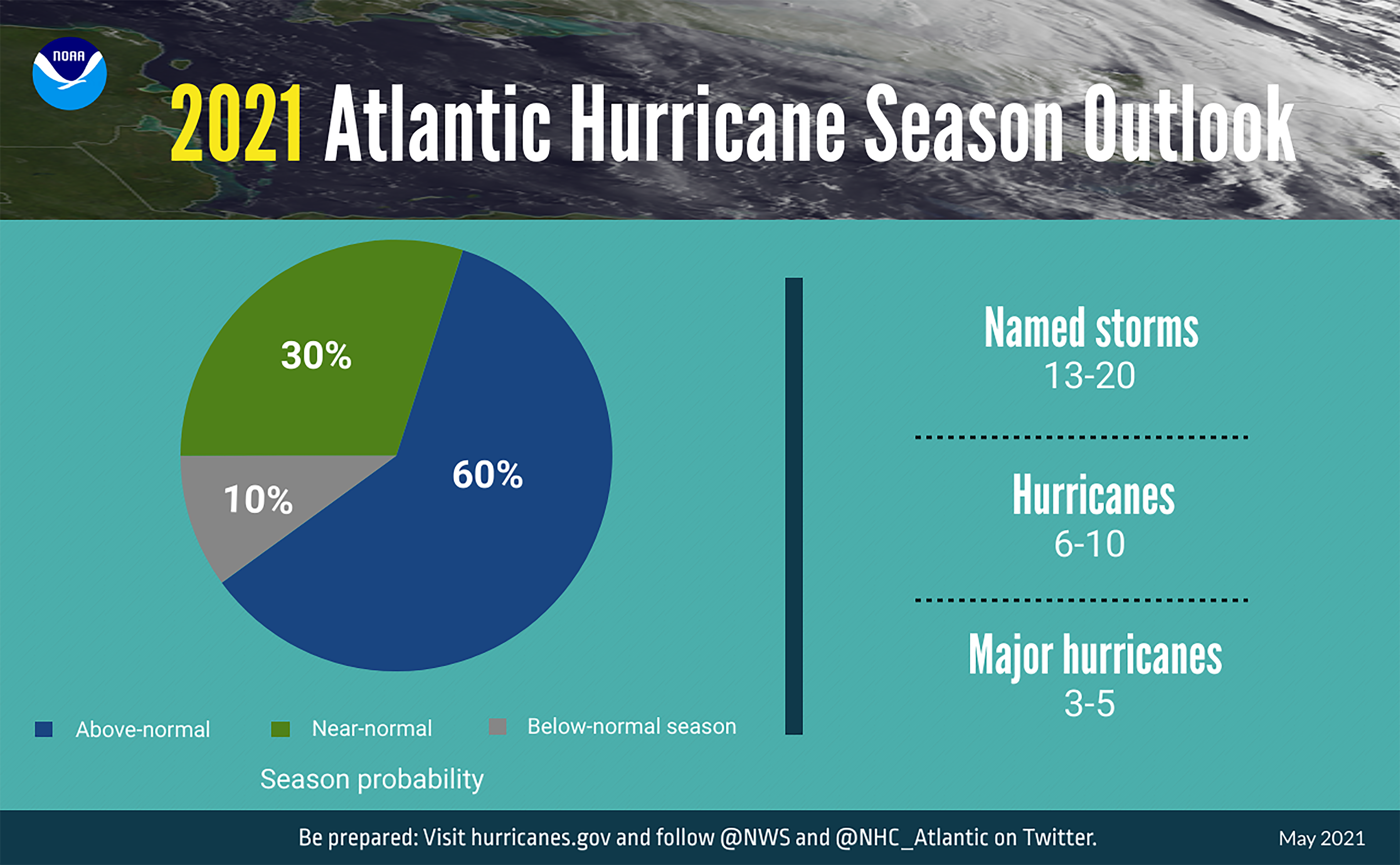
Last month, NOAA updated the statistics used to determine when hurricane seasons are above-, near-, or below-average relative to the latest climate record. Based on this update an average hurricane season produces 14 named storms, of which 7 become hurricanes, including 3 major hurricanes. [Watch this video summary of the Outlook.]
El Nino Southern Oscillation (ENSO) conditions are currently in the neutral phase, with the possibility of the return of La Nina later in the hurricane season. “ENSO-neutral and La Nina support the conditions associated with the ongoing high-activity era,” said Matthew Rosencrans, lead seasonal hurricane forecaster at NOAA’s Climate Prediction Center. “Predicted warmer-than-average sea surface temperatures in the tropical Atlantic Ocean and Caribbean Sea, weaker tropical Atlantic trade winds, and an enhanced west African monsoon will likely be factors in this year’s overall activity.” Scientists at NOAA also continue to study how climate change is impacting the strength and frequency of tropical cyclones.
“Although NOAA scientists don’t expect this season to be as busy as last year, it only takes one storm to devastate a community,” said Ben Friedman, acting NOAA administrator. “The forecasters at the National Hurricane Center are well-prepared with significant upgrades to our computer models, emerging observation techniques, and the expertise to deliver the life-saving forecasts that we all depend on during this, and every, hurricane season.”
In an effort to continuously enhance hurricane forecasting, NOAA made several updates to products and services that will improve hurricane forecasting during the 2021 season.
- In March, NOAA upgraded the flagship Global Forecast System (GFS) to improve hurricane genesis forecasting and coupled GFS with a wave model extending ocean wave forecasts from 10 days out to 16 days. Additionally, Global Positioning Satellite Radio Occultation (GPS-RO) data are now included in the GFS model, providing an additional source of observations to strengthen overall model performance.
- Forecasters at the National Hurricane Center are now using an upgraded probabilistic storm surge model — known as P-Surge — which includes improved tropical cyclone wind structure and storm size information that offers better predictability and accuracy. This upgrade extends the lead time of P-Surge forecast guidance from 48 to 60 hours in situations where there is high confidence.
- NOAA’s Atlantic Oceanographic and Meteorological Laboratory will deploy its largest array of air and water uncrewed systems to gather data designed to help improve hurricane intensity forecasts and forecast models. New drones will be launched from NOAA Hurricane Hunter aircraft that will fly into the lower part of hurricanes, and in the ocean, saildrones, hurricane gliders, global drifters, and air-deployable technology — called ALAMO floats — will track various parts of the life cycle of tropical storms.
Last year’s record-breaking season serves as a reminder to all residents in coastal regions or areas prone to inland flooding from rainfall to be prepared for the 2021 hurricane season.
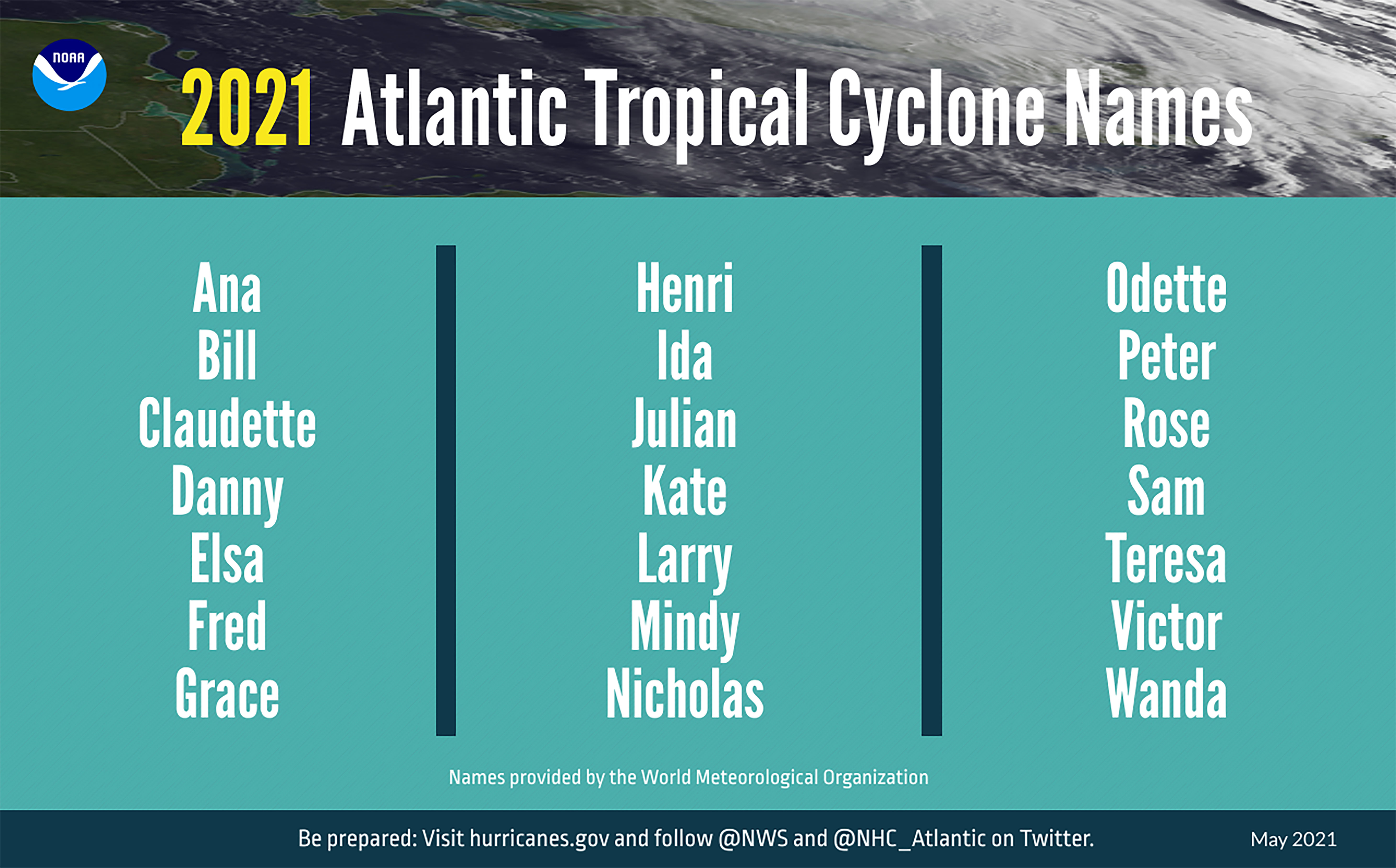
“With hurricane season starting on June 1, now is the time to get ready and advance disaster resilience in our communities,” said FEMA Administrator Deanne Criswell. “Visit Ready.gov and Listo.gov to learn and take the steps to prepare yourself and others in your household. Download the FEMA app to sign-up for a variety of alerts and to access preparedness information. Purchase flood insurance to protect your greatest asset, your home. And, please encourage your neighbors, friends and coworkers to also get ready for the upcoming season.”
NOAA also issued seasonal hurricane outlooks for the Eastern and Central Pacific basins, and will provide an update to the Atlantic outlook in early August, just prior to the peak of the season.
Visit FEMA’s Ready.gov to be prepared for the start of hurricane season and the National Hurricane Center’s website at hurricanes.gov throughout the season to stay current on watches and warnings