Board-ready M&A due diligence checks the target across twelve areas and records the source, date and confidence behind every finding, so a director can ask “how do you know?” and get an answer. The checklist below covers those twelve areas, explains what good evidence looks like for each, and shows where AI-assisted research fits without taking the decision away from your deal team.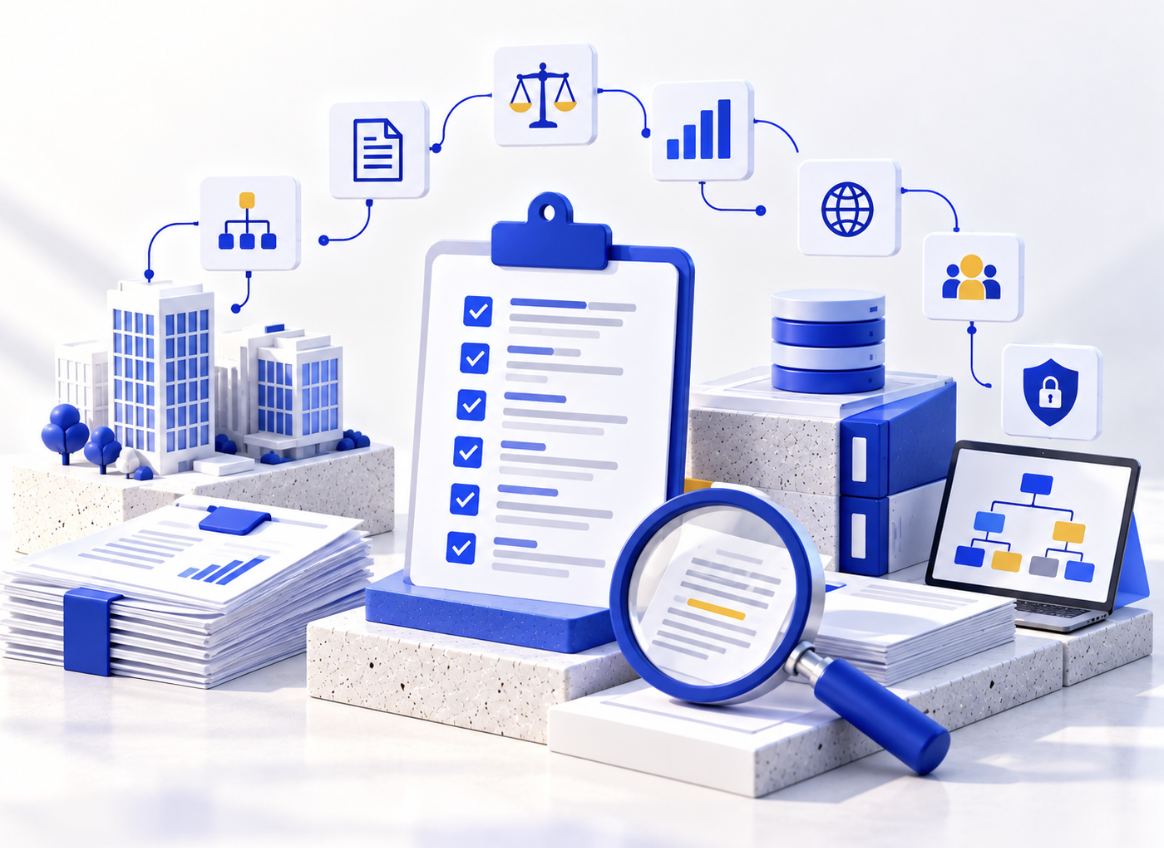
Why Does Diligence Quality Matter More Now?
Gaps in diligence are showing up as disputes after the deal. In BRG’s M&A Disputes Report 2026, which surveyed more than 200 lawyers, private equity professionals and corporate finance advisors, 46% pointed to diligence gaps as the most prevalent deal term and contractual factor behind disputes in 2025, up nine percentage points from 2024, according to Global Legal Post. BRG suggests the rise may reflect how quickly parties have been trying to close, which leaves diligence incomplete or leaves issues from diligence unaddressed in the purchase agreement.
Speed is not going to slow down, so the answer is a process that is fast and documented at the same time.
What Does “Board-Ready” Mean?
A finding is board-ready when it has four things: a clear statement of what was found, a source a director can open, a date, and a rating of how confident the team is. Open questions belong in the report too. A diligence file that lists what is still unknown is more credible than one that implies everything is settled.
The 12-Point Checklist
- Define the deal thesis and what would break it. Write down why the deal makes sense and which findings would change your mind. Every other check is easier when you know what you are testing.
- Verify the entity and ownership structure. Confirm the legal entity, subsidiaries, beneficial owners and cap table against registry filings, not only the seller’s summary. Unclear ownership is a finding in itself.
- Check legal and regulatory standing. Look for litigation, regulatory actions, sanctions exposure, licences and past settlements, and note which sources you searched.
- Test the financials. Review quality of earnings, revenue concentration, debt, off-balance-sheet items and unusual accounting treatments, and tie management’s numbers to underlying records.
- Read the key contracts. Focus on change-of-control clauses, exclusivity, termination rights and obligations that survive a sale. Check the contracts against the customers and suppliers the target says it has.
- Assess customers and suppliers. Measure how much revenue and cost depend on a few relationships, and look for signs that major counterparties are leaving or struggling.
- Profile leadership and key talent. Check the backgrounds and track records of executives and directors, and identify the people whose departure would hurt the business.
- Confirm intellectual property and technology. Verify who owns the IP, how open-source and third-party code is licensed, and whether key systems depend on a single vendor.
- Review cybersecurity and data privacy. Ask about past incidents, certifications, data handling and the security posture of the target’s own vendors.
- Examine compliance programs. Check anti-money-laundering, anti-bribery, sanctions and sector-specific controls, and whether the target can show how they are tested.
- Scan reputation and public signals. Review news coverage, regulator statements, customer and employee feedback, and changes on the target’s website and job listings that hint at trouble or strategy shifts.
- Build the source trail. For every finding, record what it is, where it came from, when it was checked, who checked it and how confident you are. Keep a separate list of open items.
Where Can AI-Assisted Research Help?
The heaviest part of diligence is gathering and cross-checking information from many places. That is where AI-assisted research helps most: it can pull sources together, compare claims across documents, flag inconsistencies and structure findings the same way each time. People remain better at judgment, such as deciding whether a customer concentration is acceptable or whether a management answer rings true.
A useful test for any tool is whether each finding links back to a source you can open. Grep, for example, builds custom AI agents for high-stakes work like due diligence, with output designed to be traceable and defensible to a board or regulator. Whichever approach you use, a finding without a source should be treated as a lead, not a conclusion.
How Do You Run Diligence on a Compressed Timeline?
Time pressure is a reason to prioritize, not a reason to skip. Start with the items that could break the thesis, then work outward. Ask the seller for documents early and track what is outstanding. Keep a running list of open questions so they can be written into the purchase agreement if they cannot be closed before signing.
Data quality is a recurring obstacle. In WTW’s 2025 M&A Barometer, 66% of surveyed HR leaders named data completeness, quality and integrity as their top challenge in HR due diligence, as WTW’s survey results describe. The survey was about people-related diligence, but the lesson applies more widely: a data room does not guarantee the data is complete.
What Red Flags Deserve a Second Look?
| Red flag | What to ask |
| Ownership that is hard to trace | Who are the ultimate beneficial owners, and what does the registry show? |
| A few customers produce most revenue | What do the contracts say, and have any customers signalled changes? |
| Leadership turnover | Who left, when, and what did they say publicly? |
| Security incidents with vague explanations | What happened, what data was affected, and what changed afterwards? |
| Numbers that differ between documents | Which source is correct, and why do the others disagree? |
Final Thoughts
Good diligence is less about doing more checks and more about being able to show your work. Cover the twelve areas, keep the source trail, list what you do not yet know, and use AI to speed up the gathering while people make the calls.
Frequently Asked Questions (FAQs)
What is included in an M&A due diligence checklist?
A full checklist covers the deal thesis, ownership, legal and regulatory standing, financials, contracts, customers and suppliers, leadership, intellectual property, cybersecurity, compliance, reputation, and a documented source trail.
How long does M&A due diligence take?
It varies widely with the size and complexity of the deal. Prioritize the items that could break the thesis, and track open items so nothing is lost if the timeline is short.
What makes due diligence “board-ready”?
Each finding has a clear statement, a source the board can open, a date and a confidence rating, and unresolved questions are listed openly.
Can AI do M&A due diligence?
AI can speed up gathering and cross-checking information, but people should review the findings and make the decisions, particularly on material risks.
What is the most common diligence mistake?
Treating the seller’s summary as verified fact. Confirm key claims against independent sources.