The Sift could mark the beginning of a very different generation for Minecraft Bedrock. Revealed during Minecraft Live, the new dimension is planned for the core game after first appearing in Minecraft Dungeons II. For Android players, the most important question is no longer whether Bedrock will receive another major world expansion, but how Mojang will adapt that idea to mobile hardware, touch controls, multiplayer, and the open-ended structure of Minecraft itself.
From the Minecraft Live Reveal to the Next Bedrock Era
The Minecraft Live announcement gave players an early look at a fourth dimension joining the Overworld, Nether, and End. Players who want to track version changes, Android compatibility, and upcoming builds can follow Minecraft PE 27 for Android as the new Bedrock release cycle develops.
The timing makes The Sift particularly important. Minecraft has expanded existing environments repeatedly, but a completely new dimension changes the underlying geography of the game. It gives Mojang room to introduce a separate visual identity, creatures, environmental rules, resources, and potentially new forms of progression without forcing those ideas into the Overworld.
For Bedrock players, that scale matters because every large concept must work across very different devices. A feature that feels natural on a powerful PC also needs to remain practical on Android phones, tablets, consoles, and other Bedrock hardware. The Sift therefore becomes both a creative expansion and a significant technical test.
| Area | What The Sift Changes | Why It Matters for Bedrock |
| Exploration | Adds an entirely new realm | Creates another long-term destination |
| World design | Introduces a separate environmental identity | Must scale across many device types |
| Progression | Could add new reasons to leave existing dimensions | Needs to fit established survival systems |
| Multiplayer | Creates new shared exploration opportunities | Must remain synchronized across Bedrock platforms |
The Sift Has to Become a Bedrock Dimension, Not Just a Port
Minecraft Dungeons II provides the first playable interpretation of The Sift, but standard Minecraft operates under very different rules. Dungeons is structured around combat, designed encounters, and action-RPG progression. Bedrock must support mining, construction, procedural exploration, farming, multiplayer, and players who may spend hundreds of hours changing the environment.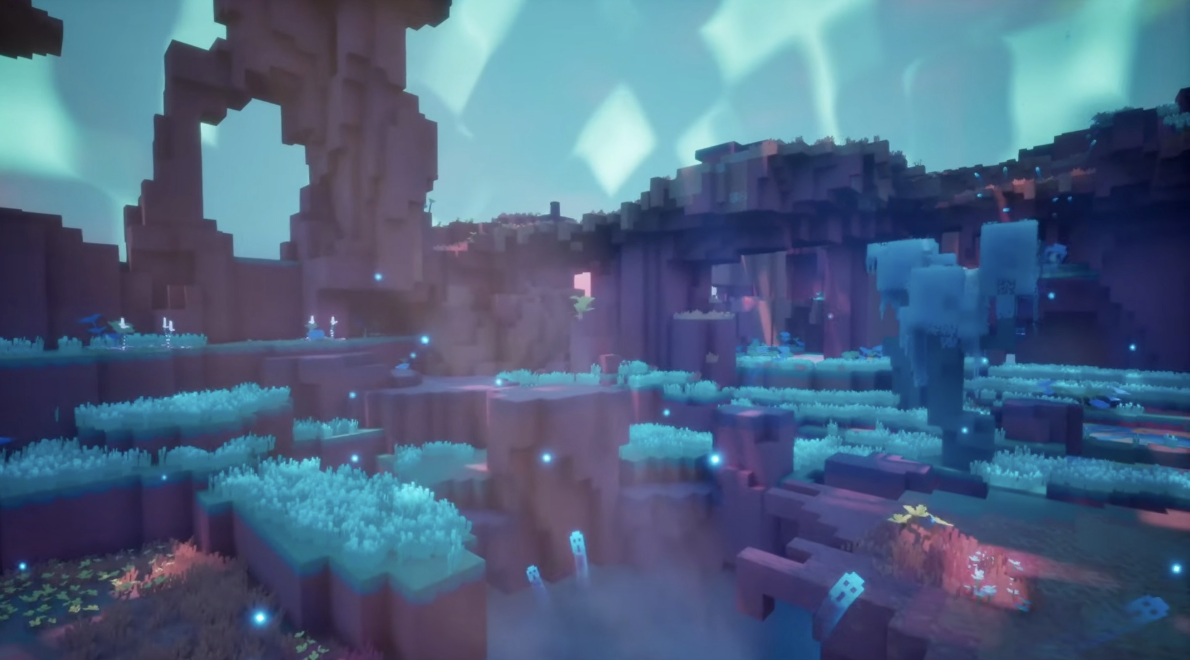
That means Mojang cannot simply reproduce the Dungeons II experience block for block. A Bedrock dimension needs enough flexibility to support builders as well as explorers. Players must be able to interact with the terrain, collect materials, establish bases, and discover reasons to return after the first visit.
This distinction also makes early speculation risky. Visual themes and creatures shown for Dungeons II can reveal the broader direction of The Sift without confirming that every mechanic will appear unchanged in Bedrock. The transition from an action RPG into a sandbox will likely require significant adaptation.
Android Performance Will Be Part of the Story
Android is where the technical side becomes especially interesting. A new dimension can introduce unusual particles, lighting, vegetation, animated entities, terrain generation, and visual effects. Each addition increases the amount of work performed by the CPU, GPU, memory, or storage system.
Modern flagship phones have substantial graphics power, but Bedrock also serves much more modest hardware. Mojang therefore has to balance visual ambition with scalability. The Sift needs to look distinctive without making the new generation inaccessible to players using older or mid-range devices.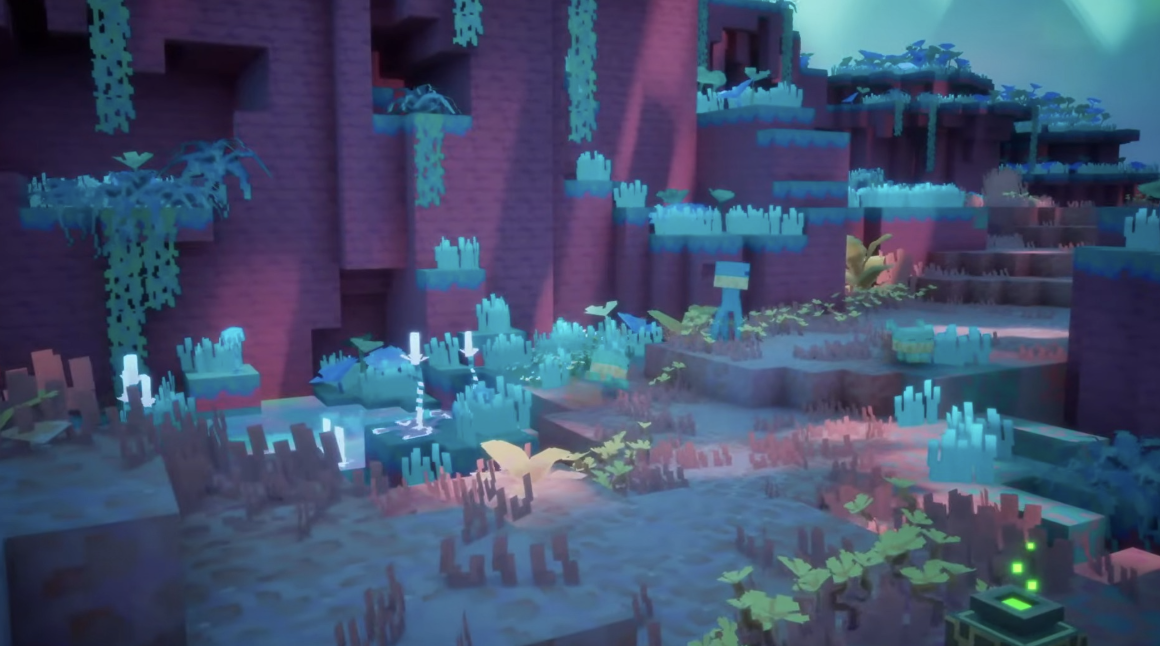
Render distance, simulation distance, texture handling, entity density, and effects could all influence how smoothly the dimension performs on mobile. Android testing during the development cycle will be particularly important if The Sift uses visual systems unlike those found in current dimensions.
| Mobile Factor | Potential Challenge | What Players May Need to Watch |
| GPU performance | New visual effects and environments | Graphics options and frame rate |
| RAM | More assets and active world data | Stuttering or background reloads |
| Storage | Larger worlds and additional resources | Free space before updating |
| Thermal limits | Long exploration sessions | Performance drops as devices heat up |
A New Dimension Could Change Bedrock Progression
The biggest unanswered question is where The Sift belongs in normal survival progression. The Nether has practical reasons to visit relatively early, while the End traditionally represents a later milestone. A fourth dimension needs its own place in that journey.
Access will therefore matter almost as much as the dimension itself. Minecraft’s existing realms have memorable entry systems, and players immediately associate the Nether with its constructed portal and the End with a much longer search. The mechanism that eventually leads into The Sift could become one of the defining images of the next Bedrock generation.
Resources will matter too. Unique blocks alone can motivate builders, but exclusive crafting ingredients, tools, mechanics, or useful environmental systems could make The Sift relevant to survival players. Mojang will need to give players reasons to return rather than treating the dimension as a one-time sightseeing destination.
Bedrock Multiplayer Could Make the Reveal Feel Even Bigger
A dimension becomes more significant when entire groups discover it together. Bedrock’s cross-platform structure means an Android player can potentially explore the same realm alongside people using other compatible devices. That gives The Sift a social dimension that Minecraft Dungeons II cannot define on its own.
Servers and Realms will also have to adapt. Administrators may need to evaluate performance, world size, gameplay rules, and whether existing community systems interact correctly with whatever mechanics The Sift introduces.
Add-on creators face a similar opportunity. A new dimension can create new themes for entities, structures, maps, and custom experiences, while also introducing technical changes that require older projects to be tested again.
| Bedrock Group | What The Sift Could Mean | Main Question |
| Survival players | Another major progression destination | When should players enter it? |
| Builders | New blocks and environmental styles | Which materials will be obtainable? |
| Server owners | New multiplayer exploration | How demanding will the dimension be? |
| Add-on creators | New themes and technical possibilities | Which Bedrock systems will change? |
Why Minecraft Live Was Only the Beginning
The reveal answered the largest question by confirming that The Sift is coming to the main Minecraft experience. It left many of the smaller, more important gameplay questions open. That gives Mojang room to introduce the dimension gradually as development moves toward its Bedrock and Java implementation.
For Android players, the coming builds should reveal far more than screenshots. They can show how the dimension performs on mobile hardware, how its interface and controls translate to touchscreens, and whether existing worlds and add-ons require preparation before updating.
The Sift therefore represents more than one destination. It could define the transition into Minecraft’s next Bedrock generation: a period in which one of the game’s oldest structural assumptions finally changes and mobile players get a completely new world to learn alongside everyone else.
FAQ
Is The Sift coming to Minecraft Bedrock Edition?
Yes. Mojang has announced The Sift for the core Minecraft experience, including Bedrock Edition, after its introduction through Minecraft Dungeons II.
Why is The Sift important for Android players?
A completely new dimension can introduce additional world generation, visual effects, resources, and mechanics, making mobile performance and compatibility important parts of the rollout.
Will The Sift be identical to the Dungeons II version?
Not necessarily. Standard Minecraft has building, mining, survival, and procedural exploration systems that require a different design approach from an action RPG.
Could The Sift affect existing Bedrock add-ons?
Potentially. Major Bedrock changes can affect scripts, components, resources, or experiments, so creators may need to test older projects as new builds appear.
What should Android players watch as Minecraft 27 develops?
The most important areas will be device compatibility, performance, world conversion, add-on support, new dimension mechanics, and the differences between early test builds and stable releases.