A smoke detector can sit on the ceiling for years, look perfectly fine, and still stop doing its job well. The plastic shell ages slowly. The sensor inside doesn’t.
The smoke alarm beeping sound isn’t random. It’s a warning. Sometimes it’s a weak battery, sometimes dirt, and sometimes the alarm is old enough that the sensor can’t be trusted anymore.
Knowing which one you’re hearing is the difference between a quick fix and a detector that needs to go.
How smoke detector sensors wear out and lose accuracy
Smoke detector sensors don’t last forever. Most home units are built for about 7 to 10 years, and everyday conditions can shorten that clock.
Age is the big one, but dust, moisture, cooking grease, and heat all wear the sensor down over time.
How Do Smoke Detectors Work? | Spec. Sense
What happens inside the sensor as it gets older
Inside the alarm is a sensing chamber and a small set of electronics that read what the chamber detects. Over the years, that chamber can collect fine debris. The electronics can drift too. Tiny parts don’t have to snap in half to become less reliable.
Think of it like a window that slowly gets foggy. The frame still looks fine. The view is worse.
That’s the problem with an aging smoke alarm. It may react slower to smoke, or miss the early signs of a fire. The test button can still make the horn sound, because that button mainly checks power, the speaker, and basic circuitry. It does not prove the sensor is still reading the air the way it should.
Why kitchens, bathrooms, and dusty rooms speed up wear
Some rooms are rough on alarms. Kitchens throw grease into the air. Bathrooms fill with steam. Dusty rooms, laundry areas, and spots near vents push particles into the sensing chamber. Even tiny insects can get inside and interfere with the sensor.
Heat swings don’t help either. A detector near a hot ceiling, a sunny room, or an unconditioned space ages faster than one in a stable hallway.
That is why a smoke alarm can start false alarms, chirping for no clear reason, or responding late. It isn’t “being sensitive.” It may be wearing out faster than normal.
What the beeping is really telling you
Beeping is a message, not background noise. The trick is matching the pattern to the problem, because different chirps point to different fixes.
This is true whether you have a basic battery-powered detector or a newer smart alarm that sends alerts to your phone.
Patterns vary by brand, but this quick guide covers the usual ones.
| Sound pattern | Common meaning | What to do |
| One chirp every 30 to 60 seconds | Low battery | Replace the battery, then reset if needed |
| Chirping continues after a new battery | End of life or internal fault | Check the date, replace if old |
| Random chirps after dust, steam, or bugs | Dirty sensor or contamination | Clean gently, then retest |
| Full loud alarm | Smoke or urgent fault | Treat it as real until proven otherwise |
Timing tells you more than the alarm’s volume. If you still have the manual, use it, because manufacturers often assign different chirp patterns.
Low battery chirps versus end of life alerts
A weak battery is the most common reason for a smoke detector chirping. That can happen in battery-only alarms and in hardwired units, because hardwired models still rely on a backup battery during outages.
If the chirp comes back after a fresh battery, stop assuming it’s a battery problem. Many newer alarms have an end of life warning built in. Once the unit reaches its age limit, replacement is the fix, not another battery.
If the alarm is 10 years old, a new battery is a Band-Aid, not a fix.
When dirt or damage causes false beeping
False beeping can come from dust, loose battery contacts, moisture, insects, or a small crack in the housing. Any of those can confuse the sensor or interrupt power.
Cleaning may help, but only if the alarm is still within its service life. Vacuum the vents gently, replace the battery, and reset the unit if the manual says to. If it keeps chirping after that, the unit is telling you something more serious.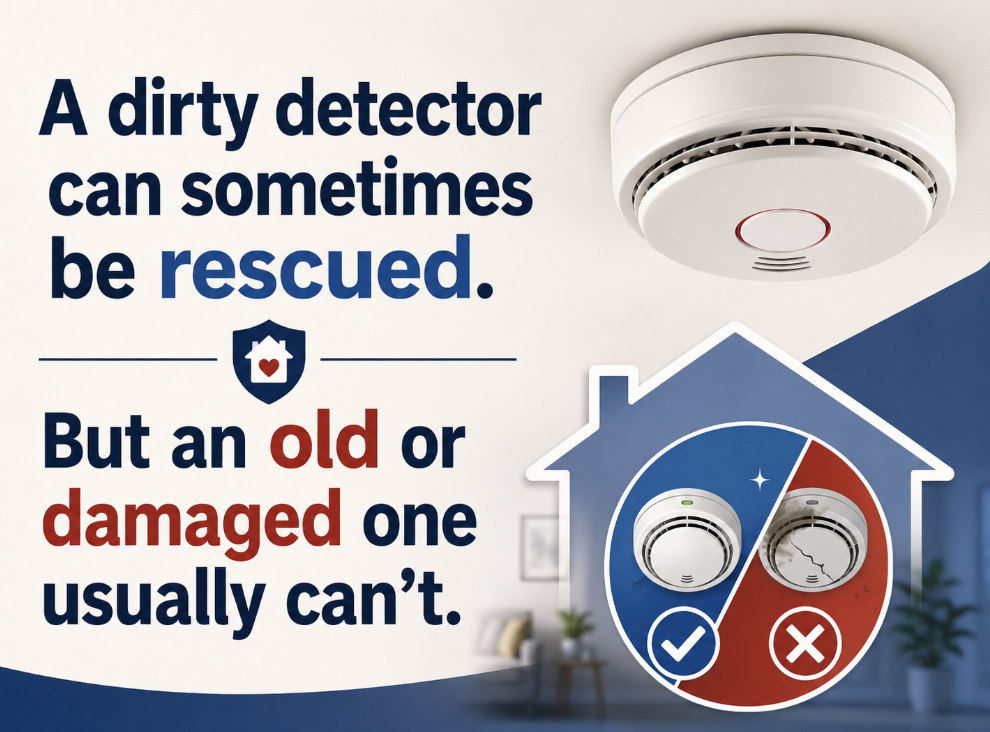
How to tell whether your smoke detector still has a good sensor
Here’s the part that fools people. A smoke alarm can pass a button test and still have a worn sensor. The button matters, but it isn’t a full health report.
The best starting point is the unit’s age, not how clean it looks.
Check the manufacture date before you trust the alarm
The manufacture date is usually printed on the back or side of the unit. You may need to twist it off the mounting plate to see it. Don’t be too lazy to check your smoke alarm.
Also, don’t guess by color or appearance. A clean alarm can still be too old to trust.
If it’s 10 years old or more, replace it. Some models use a shorter window, so the label still matters, but 10 years is the line most homeowners should remember.
That date matters more than the day you moved in, and more than the day you first noticed the chirping.