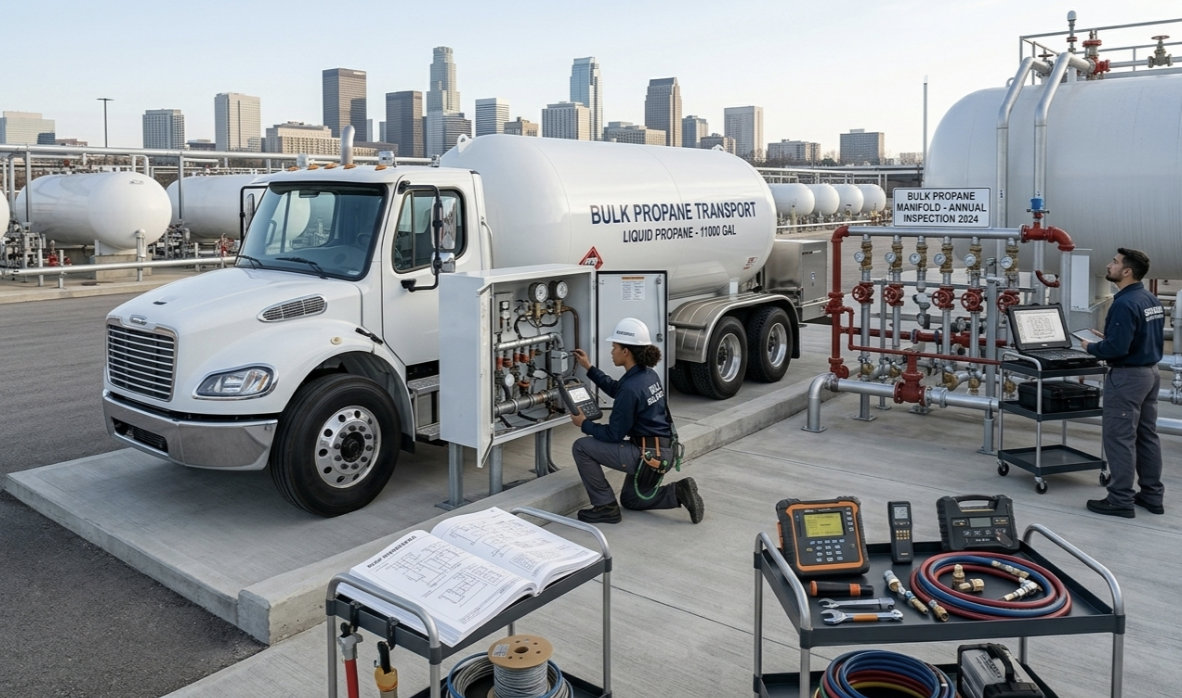
Trucks are on the road before sunrise, tanks are swapped at job sites, and equipment travels across service territories every single day.
Yet a significant number of propane distribution businesses carry inland marine insurance coverage that doesn’t actually match how they operate. The gaps aren’t always obvious, but they show up fast when a claim gets filed.
This article covers what propane distributors most commonly get wrong about inland marine coverage, and what a properly structured policy actually needs to include.
What Inland Marine Insurance Coverage Actually Covers (and What It Doesn’t)
The name is confusing. Inland marine insurance has nothing to do with boats.
It originated as an extension of ocean marine coverage, designed to protect goods and equipment while they move overland.
For propane distributors, that means covering assets that are away from a fixed location, in transit, stored at customer sites, or deployed across a service area.
Standard commercial property insurance covers contents at your business address. The moment your equipment leaves the yard, that coverage typically stops. Inland marine picks up where property insurance ends.
But here’s where propane distributors get into trouble: they assume their commercial auto policy covers everything on the truck. It doesn’t.
Commercial auto covers the vehicle and liability related to its operation. It does not automatically cover the specialized equipment mounted to that truck or the product being transported.
That distinction creates a gap that costs distributors real money when losses occur.
| Quick Summary: Inland marine insurance coverage protects equipment and goods that move between locations. For propane distributors, it fills the gap between commercial property (fixed location) and commercial auto (vehicle only), covering specialized equipment and cargo in transit. |
The Three Mistakes Propane Distributors Make With Inland Marine Coverage
1. Insuring Equipment at Purchase Value, Not Replacement Cost
Propane delivery trucks carry thousands of dollars in specialized equipment. Meters, hoses, regulators, hand trucks, and tank monitoring systems are not standard items you can replace at a hardware store.
Many distributors insure this equipment at its original purchase price or current book value. But replacement cost is what matters after a loss. Depreciated values leave businesses paying the difference out of pocket on equipment that costs significantly more to replace today than it did three or five years ago.
A proper inland marine policy for propane operations uses replacement cost valuation, not actual cash value.
2. Leaving Customer-Sited Tanks Unprotected
Propane distributors place tanks at customer properties and retain ownership of them. Those tanks sit on farms, at commercial facilities, and at residential properties across a wide service territory.
Standard property policies don’t cover property you own that sits on someone else’s land. And commercial auto doesn’t cover stationary assets. So where does that leave your customer-sited tank inventory?
Without a specific inland marine endorsement or floater covering off-premises property, those tanks are uninsured for physical damage. Theft, vandalism, weather events, and vehicle impact are all real exposures for tanks sitting at customer locations.
3. Underestimating the Value of Tools and Monitoring Equipment
Tank monitoring technology has changed propane distribution significantly. Remote monitoring devices, telemetry systems, and diagnostic equipment now travel with technicians and get installed at customer sites.
This equipment is expensive. A single monitoring unit can cost several hundred dollars. Across a fleet of service vehicles and hundreds of customer installations, that exposure adds up fast.
Most inland marine schedules don’t automatically include this newer category of equipment. Distributors who added monitoring technology to their operations often didn’t go back and update their policy to reflect it.
| Quick Summary: The most common inland marine mistakes propane distributors make are insuring at depreciated values instead of replacement cost, leaving customer-sited tanks without coverage, and failing to schedule newer monitoring and telemetry equipment on their policy. |
How Propane-Specific Operations Change the Coverage Equation
A general inland marine policy written for a construction contractor or a medical equipment company is built around different assumptions than one written for a propane distributor.
Propane operations have exposures that require specific underwriting attention:
- Bulk liquid cargo in transit requires cargo coverage, not just equipment coverage
- Seasonal fluctuations in tank placements affect the total insured value at any given time
- Multiple drivers and vehicles mean equipment exposure multiplies across the fleet
- Regulatory compliance for hazardous materials transport affects how claims are evaluated
A distributor who carries inland marine insurance coverage designed specifically for propane operations gets underwriting that accounts for all of these realities. A distributor who carries a generic policy gets a document that may look adequate on paper but creates disputes the moment a claim involves propane-specific circumstances.
The difference between a specialty program and a general one becomes clear fast when you’re trying to get a claim paid on a bulk tank that was damaged at a customer’s property during a delivery.
What a Properly Structured Inland Marine Policy Looks Like for Propane Distributors
A well-built inland marine policy for a propane distribution company should address several specific areas:
- Scheduled equipment coverage for all specialized tools and vehicle-mounted equipment, valued at replacement cost
- Off-premises property coverage for customer-sited tanks and any equipment installed at customer locations
- Cargo coverage for propane in transit on delivery vehicles
- Bailee coverage if the distributor handles tanks or equipment owned by customers or third parties
- Newly acquired property provisions that automatically extend coverage to equipment added mid-term, up to a specified limit
That last point matters more than most distributors realize. Businesses that grow their fleet or add monitoring equipment during a policy period often assume they’re covered. They may not be, unless the policy includes an automatic coverage extension clause.
Reviewing your inland marine schedule every policy year, not just at renewal, keeps your actual exposure aligned with your actual coverage.
FAQs
What does inland marine insurance cover for propane distributors?
Inland marine insurance covers equipment, tools, and cargo that move between locations or sit at off-premises sites. For propane distributors, this includes delivery equipment, customer-sited tanks, monitoring devices, and bulk propane in transit. It fills the gap between commercial property and commercial auto coverage.
Does commercial auto insurance cover equipment on a propane delivery truck?
Commercial auto covers the vehicle itself and third-party liability from its operation. It does not automatically cover specialized equipment mounted to the truck or the cargo being transported. Those exposures require inland marine or cargo coverage added separately or through a specialty program.
Are customer-sited propane tanks covered under standard property insurance?
Standard commercial property insurance covers property at your listed business location. Tanks you own that sit on customer properties fall outside that coverage. An inland marine floater or off-premises property endorsement is needed to protect that asset inventory.
How often should propane distributors update their inland marine schedule?
At minimum, annually at renewal. But any time the business adds vehicles, equipment, or monitoring technology, the schedule should be reviewed. Policies with automatic newly acquired property provisions offer some buffer, but they don’t replace a full schedule update.
Why do propane distributors need a specialty insurance program instead of a standard policy?
Propane operations involve hazardous material transport, customer-sited assets, and specialized equipment that standard policies aren’t underwritten to cover accurately. A specialty program accounts for these exposures from the start, reducing disputes and gaps when claims involve propane-specific circumstances.