If you live in a Hong Kong flat, you may have wondered whether your tap water needs extra treatment before drinking. You might notice a chlorine taste, see limescale in your kettle, or want more confidence for family members with sensitive needs. Whatever raised the question, the local range of home water filtration options can feel confusing, especially when marketing claims are hard to verify.
This guide helps you focus on the practical choices. It explains how to choose a water purifier that fits your apartment, maintenance habits, and budget. Rather than ranking products, it shows what to verify, which technologies match common goals, and how to estimate the real cost of ownership.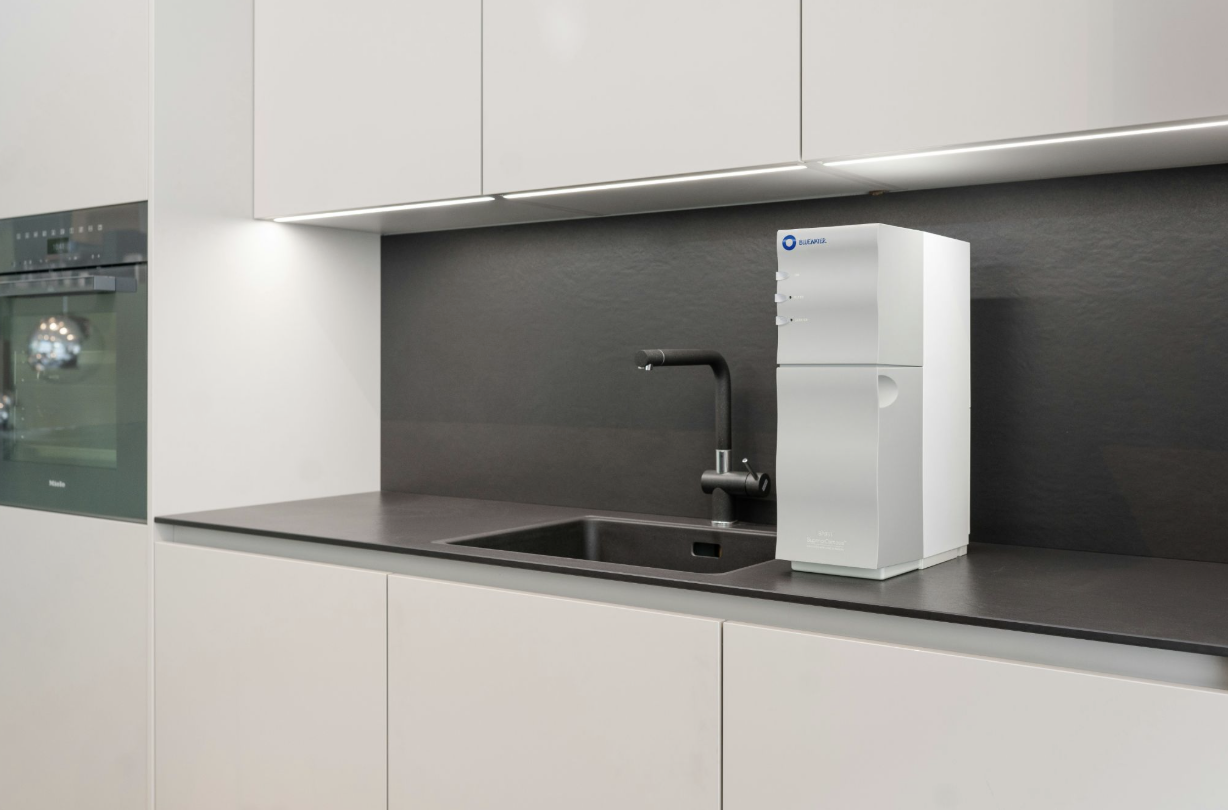
Key Takeaways
- Start with your goal, not a product. Taste and odour improvement, scale reduction, and health-related contaminant concerns each point toward different technologies and certifications.
- Point-of-use vs. point-of-entry is the first decision. Most Hong Kong flats suit a point-of-use setup, such as an under-sink filter, countertop unit, or dispenser. Whole-home systems need more space, plumbing work, and building-management approval.
- Check certifications, not just claims. Phrases such as tested to a standard or meets a standard are not the same as independent certification. Verify the exact model and cartridge through official NSF product listings.
- Plan total ownership cost. Hardware price is only the start. Factor in replacement filters, service visits, electricity, and water waste for RO systems.
- Confirm building and WSD requirements before installation. Renters should also get landlord consent before drilling, adding a drain line, or modifying plumbing.
Step 1: Clarify Your Goal
Different goals call for different technologies. Before browsing catalogues, decide what you want the filter to do.
- Taste and odour. Chlorine taste and sediment are common complaints. Activated carbon filters are widely used for these issues.
- Scale reduction. Hard-water buildup on kettles, coffee machines, and shower heads may call for ion-exchange or scale-inhibiting media.
- Appliance protection. Sediment prefilters can help protect washing machines, water heaters, and other appliances from visible particles.
- Sensitive household members. If you have specific health concerns, speak with a medical professional first. Then look for systems certified under the relevant NSF/ANSI standard for the contaminant you want to address.
No single technology addresses every concern. A good choice starts with matching the system to your main goal.
Step 2: Assess Your Flat and Plumbing Constraints
Hong Kong apartments vary widely in layout. A system that works in a village house kitchen may not fit under the sink in a compact high-rise flat. Run through these checks before shortlisting models, and apply the same space logic when comparing compact home appliances for a small kitchen.
- Under-sink space and depth. Measure cabinet dimensions in centimetres. Some reverse osmosis (RO) units with tanks need 30 cm or more of clear depth.
- Power access. RO booster pumps, UV lamps, and hot/cold dispensers usually need a nearby 13A outlet.
- Drain connection. RO systems produce reject water and need a drain line routed to the sink waste or a separate outlet.
- Countertop clearance. Dispensers and countertop units sit on the worktop. Measure the height under upper cabinets.
- Water pressure. Some systems require a minimum inlet pressure. Check with building management or a licensed plumber if you are unsure.
- Rental vs. ownership. Renters should consider non-invasive options, such as faucet-mount filters, countertop units, or gravity pitchers. Always get landlord consent in writing before making changes.
- Building-management permissions. In some buildings, alterations to fresh-water plumbing may require notification or approval.
What Are Your Home Water Filtration Options in Hong Kong?
Water filtration systems generally fall into two categories: point-of-use (POU) and point-of-entry (POE).
Point-of-Use (POU)
POU systems treat water at a single tap or dispenser. They are the most common choice for Hong Kong flats because they require less space and simpler installation.
- Under-sink cartridge filters. Compact and hidden in the cabinet. They typically use carbon block or ultrafiltration (UF) membranes. Basic models do not need power.
- Countertop units. Sit next to the sink and connect to the faucet aerator. They are easy to install and remove, which makes them renter-friendly.
- Faucet-mounted filters. Attach directly to the tap. They are simple, but usually have lower capacity and slower flow than under-sink systems.
- Pitcher and gravity filters. Require no installation. They can be useful as a starting point, though filter life and flow rate are modest.
- Reverse osmosis (RO) systems. Available in tank-based and tankless configurations. They are commonly used to address dissolved solids and a broad range of contaminants. They require a drain connection and have a specified reject-to-product water ratio, so confirm the exact ratio on the manufacturer’s datasheet.
- UV add-ons. Ultraviolet lamps are used for microbial concerns. Effectiveness depends on UV dose, flow rate, and prefiltration. Check the manufacturer’s installation manual for exact requirements.
- Integrated hot/cold/sparkling dispensers. Combine filtration with instant hot or chilled water. They are convenient, but they need power and suitable counter or under-counter space.
Point-of-Entry (POE)
POE, or whole-home, systems treat all water entering the flat. They are less common in Hong Kong apartments because they require installation at the main supply line and usually need building-management approval.
They make more sense in houses or situations where internal plumbing may contribute sediment or scale. That gives whole-home filtration a different approval and maintenance profile from apartment-friendly POU systems.If you want to see how local suppliers group point-of-use filters, integrated dispensers, and whole-home units by use case, reviewing a water purifier Hong Kong catalogue can help you compare categories before you move into specifications and service terms.
Filtration Technologies in Plain English
Each technology has trade-offs. Here is a brief overview.
- Sediment prefilters. Catch particles such as rust and sand. They are often the first stage in multi-stage systems. They are low cost and do not need power.
- Activated carbon (GAC and carbon block). Commonly used to address chlorine taste, odour, and some organic compounds. Carbon block is denser than granular activated carbon (GAC) and is often more effective per unit of volume. It does not need power or a drain.
- Ultrafiltration (UF). A membrane technology used to reduce fine particles and many bacteria while retaining minerals. Claims for viruses vary by pore size and certification, so check the exact model.
- Reverse osmosis (RO). Forces water through a very tight membrane. It is commonly used for a broad range of dissolved contaminants. It requires a drain for reject water and often a power source for a booster pump.
- Ultraviolet (UV). Uses UV light to address bacteria and viruses. It requires power and does not remove chemical contaminants or sediment, which is why prefiltration is usually needed.
- Ion exchange and scale inhibition. Used for limescale and certain dissolved minerals. These media are often found in kettle or appliance protection filters.

Map Goals to Likely Approaches
Use this as a starting framework, not a guarantee. Always confirm that the specific model you are considering is certified for the claim that matters to you.
- Taste and odour improvement. Carbon block or GAC is usually the first choice. Look for NSF/ANSI 42 certification on the exact cartridge.
- Suspected heavy metals, such as lead from old internal pipes. Certified carbon block or RO may be suitable. Verify that the model is listed under NSF/ANSI 53 for the specific contaminant.
- Microbial concerns for sensitive users. Consider UV disinfection or purifiers certified under NSF/ANSI P231. Consult a healthcare provider for guidance on your situation.
- Scale on kettles and appliances. Ion-exchange or polyphosphate scale media may help. Check manufacturer data for expected capacity and replacement timing.
Maintenance and Total Cost of Ownership
The sticker price of a purifier tells only part of the story. Use a simple formula to estimate monthly cost.
(Hardware + filters/consumables + service visits + electricity + water waste) / expected months of use = monthly cost
- Replacement filters. Intervals vary by model and water quality. A carbon cartridge might last 6 to 12 months, while an RO membrane may last 2 to 3 years. Use the manufacturer’s official schedule as a baseline and adjust based on usage.
- Service visits. Some suppliers bundle annual servicing. Others charge per visit. Clarify the cost and scope upfront.
- Electricity. Relevant for UV, RO booster pumps, and hot/cold dispensers.
- Water waste. RO reject water adds to your water use. In a small flat, it is worth calculating.
Set calendar or app reminders for filter changes. Follow the manufacturer’s sanitisation procedures to keep the system hygienic between replacements.
Quick Buyer’s Checklist
Tick these off before making a purchase.
- Measured available space, including under-sink depth and countertop clearance, in centimetres.
- Confirmed 13A power outlet access if the system needs it.
- Confirmed drain access for RO systems.
- Obtained building-management or landlord permission where required.
- Identified which appliances, such as a fridge or coffee machine, you want to connect.
- Verified certifications for the exact model and cartridge through official NSF listings.
- Calculated estimated monthly ownership cost using the formula above.
- Reviewed after-sales support and filter availability.
- Checked the trial period or return policy.
FAQ
These common questions can help you narrow your choice before comparing specific models.
Is reverse osmosis overkill for a Hong Kong flat?
It depends on your goals. If your primary concern is taste and chlorine, a simpler carbon filter may be enough. RO is commonly chosen when residents want to address a broader range of dissolved contaminants. Check your building’s water-tank maintenance history and consider a water test before committing to RO.
Can a pitcher filter replace an under-sink system?
Pitchers are convenient and require no installation, but they have limited filter capacity, slower flow, and a narrower range of contaminant reduction than under-sink cartridge or RO systems. They work as a starting point or supplement, not as a full replacement if you have specific water-quality goals.
How often do filters need changing?
It varies by model, cartridge type, usage, and local water quality. Manufacturer schedules are the baseline. If your building’s water has higher sediment levels, filters may clog sooner. Monitor flow rate and taste as practical indicators, and follow the manufacturer’s service manual.
Does RO wastewater matter in a small flat?
Yes. RO systems produce reject water at a ratio specified by the manufacturer. This adds to water use and requires a drain connection. Confirm the exact ratio on the product datasheet and include it in your ownership calculation.
Wrapping Up
Choosing a water purifier in Hong Kong comes down to a clear sequence: define what you want the filter to do, audit your flat’s space and electrical constraints, choose a configuration that fits, verify certifications for the specific model, and plan for maintenance costs. Before installing anything that changes plumbing, confirm requirements with the Water Supplies Department and building management, and use a licensed plumber where appropriate. A little upfront verification can help you avoid a poor fit and choose a system you can maintain properly.