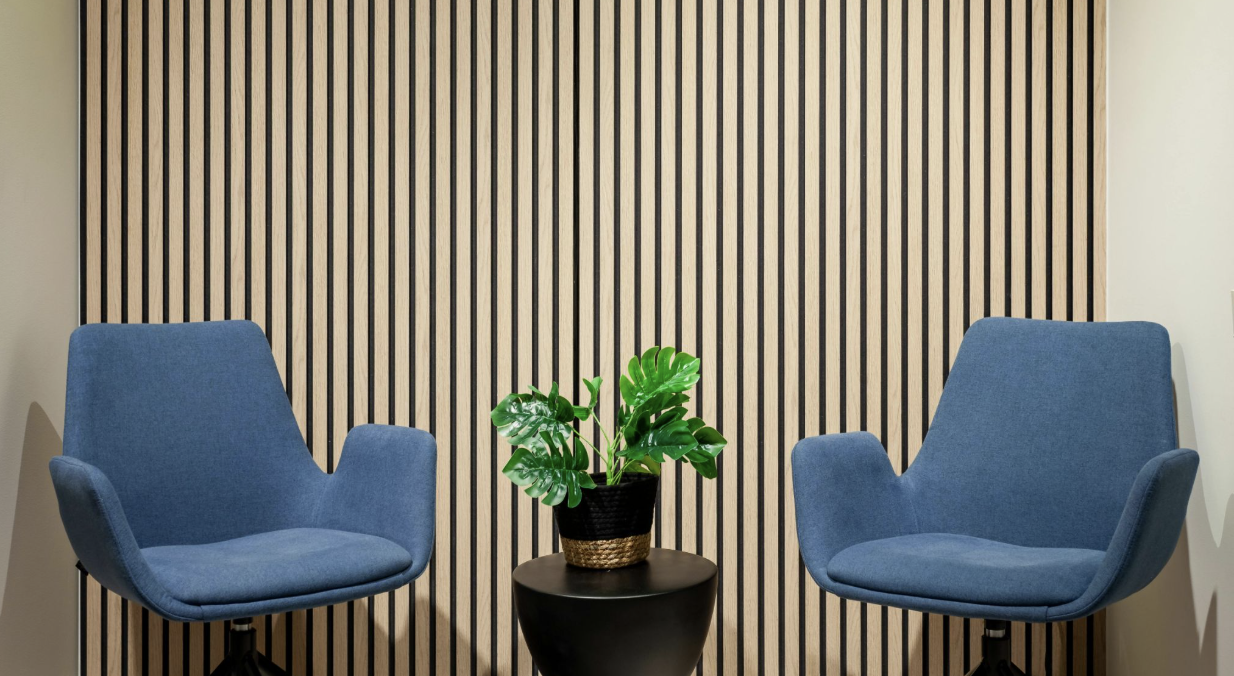
As British businesses move away from traditional layouts, the need for sound management has skyrocketed. This is where acoustic panels have stepped in, not just as a functional fix, but as a core element of high-end interior design.
The Rising Demand for Acoustic Clarity in British Workspaces
In a busy London or Manchester hub, the “hum” of an office can quickly turn into a roar. Between Zoom calls, coffee machine chatter, and the clatter of keyboards, employees often find it impossible to focus.
Recent studies in workplace productivity suggest that noise is the leading cause of dissatisfaction in open-plan offices. To combat this, architects are looking beyond standard insulation and turning toward visible, aesthetic solutions.
Acoustic panels are now being used to create “zones” within a single room—allowing for a quiet deep-work area and a loud collaborative lounge to coexist side-by-side.
Balancing Aesthetics with Sound Functionality
The biggest misconception about soundproofing is that it has to be ugly. Older solutions often involved industrial-looking foam that was hidden away. Today, the trend is quite the opposite.
Interior designers are now treating sound management as an opportunity for branding and decor. By utilizing custom acoustic wall panels for noise reduction, companies can match their office’s colour palette, incorporate company logos, or even create geometric wall art that serves a dual purpose.
Why Design Matters:
- Visual Texture: Fabric-wrapped surfaces add warmth to otherwise “cold” glass and concrete buildings.
- Brand Identity: Custom shapes and colours can reflect a company’s culture.
- Employee Wellbeing: A visually pleasing office that is also quiet reduces cognitive load and stress.
Luxury Acoustic Panelling: The Designer’s New Secret Weapon
For premium commercial projects, standard solutions often aren’t enough. High-end firms are increasingly seeking out luxury acoustic panelling for interior designers to provide a sophisticated finish.
These panels often feature sustainable materials, premium wool fabrics, or timber slats. They don’t just “soak up noise”; they add a sense of prestige to boardrooms and executive suites. When a client walks into a meeting room, the immediate drop in reverb creates an atmosphere of calm and professional authority.
Solving the Echo in High-Ceiling Offices
Many modern UK offices are housed in refurbished industrial buildings or “warehouse-style” spaces. While these look incredible with their exposed brick and high ceilings, they are acoustic nightmares. Sound bounces off the hard surfaces, creating a “cavern” effect.
This is where verticality becomes essential. By installing high-performance acoustic ceiling baffles, businesses can intercept sound waves before they have the chance to bounce off the ceiling.
Benefits of Ceiling Baffles:
- Unobstructed Floor Space: Ideal for offices where wall space is taken up by windows or storage.
- Industrial Aesthetic: They complement the “loft” look while providing massive surface area for sound absorption.
- Improved Speech Intelligibility: Essential for conference halls where every word needs to be heard clearly.
The Environmental Edge: Sustainability in UK Acoustics
The UK market is increasingly focused on the “Green Office.” Modern acoustic solutions are keeping pace by using recycled PET (polyethylene terephthalate) and sustainable natural fibres.
Many of the acoustic panels used in contemporary fit-outs are made from recycled plastic bottles, which are then compressed into high-density felt. This allows companies to meet their ESG (Environmental, Social, and Governance) targets while simultaneously improving their daily work environment.
Practical Tips for Implementing Acoustic Solutions
If you are looking to redefine your office interior, a “one size fits all” approach rarely works. You need a strategy that targets specific problem areas.
1. Identify “Hot Zones”
Identify where the noise is coming from. Is it the breakroom? The sales floor? Place your panels as close to the source of the noise as possible.
2. Mix and Match
Don’t just stick to walls. Combine wall-mounted panels with ceiling baffles to ensure sound is absorbed from multiple angles.
3. Consider Lighting
Many modern acoustic panels now come with integrated LED lighting, allowing you to solve your acoustic and illumination needs with a single fixture.
The Future of the “Quiet Office”
As we look toward the future of UK work culture, the hybrid model remains dominant. When employees do come into the office, they expect an environment that is superior to their home setup. They want spaces that facilitate deep concentration and high-quality communication.
Redefining an office through acoustics is no longer a luxury; it is a necessity for talent retention. A quiet office is a productive office, and a beautiful office is an inspiring one.
Conclusion
The shift toward high-quality sound management is more than just a trend—it is a fundamental change in how we perceive the workplace. By integrating acoustic panels into the very fabric of interior design, UK businesses are creating spaces that look as good as they sound.
From the visual impact of custom acoustic wall panels for noise reduction to the technical efficiency of high-performance acoustic ceiling baffles, the options available today allow for total creative freedom.
If you are an architect or business owner, investing in luxury acoustic panelling for interior designers is the most effective way to ensure your space is ready for the demands of the modern world. Silence, it seems, is the new gold standard of luxury.