
In the fast-changing world of digital technology, managed service providers (MSPs) face ongoing demands to enhance value, broaden their service offerings, and keep pace with new technological advancements. A highly effective strategy to meet these challenges involves establishing partner programs that consolidate expertise, resources, and innovation. By working alongside technology vendors and ecosystem partners, MSPs can gain new capabilities, speed up service delivery, and offer clients leading-edge solutions without stretching their internal resources too thin.
The concept of “Stronger Together” succinctly embodies how MSP partnerships elevate IT services. These collaborations allow providers to transcend conventional services and adopt sophisticated solutions like cloud management, cybersecurity, and AI-enhanced offerings. Consequently, MSPs improve client satisfaction, bolster their competitive positions, optimize operations, and foster scalable growth opportunities within a more interconnected IT landscape.
Why Partner Programs Matter for MSPs Today—market forces, customer demands, and the case for collaboration
Enterprises are accelerating digital transformation while tightening budgets, expecting measurable cost optimization, continuous security, and faster cloud migration. According to industry watchers like Omdia and Canalys, buyers now favor outcome-based engagements delivered by a qualified Managed Services Provider that proves repeatability, resilience, and innovation. In this climate, an MSP partner program is not optional—it’s the operating system for scale.
Within the AWS Partner Network, collaboration amplifies reach and relevance. The AWS Managed Services Provider Program sets enterprise standards for service delivery and technical validation, helping MSPs demonstrate a mature MSP practice across the entire cloud journey. By aligning with Amazon Web Services and AWS, providers gain technical enablement, go-to-market support, and funding benefits that materially improve win rates and customer outcomes.
Customers expect secure, automated solutions backed by 24/7 expert support. An integrated MSP partner program offers program benefits like migration incentives, tooling credits, training, and workshops with AWS experts, all anchored in program requirements that reduce risk and accelerate business transformation. The result is a stronger, more responsive managed services engine that keeps pace with evolving demand.
Anatomy of a High-Performing MSP Partner Program—tiers, enablement, certifications, MDF, deal registration, co-selling, support
1. Structure and Governance
a. Tiers and Program Requirements
Tiered models in the AWS Partner Network clarify capabilities and investment. Clear program requirements—documented in the MSP Program Guide and surfaced in Partner Central—define milestones for a validated AWS MSP, from design patterns to incident playbooks and customer success criteria.
b. Technical Validation and Third-Party Audit
High-performing frameworks insist on technical validation via a rigorous third-party audit that inspects architecture, security, observability, and service delivery. Calibration guides and a structured self-assessment prepare teams for renewal cycles, ensuring the MSP practice continually improves its cloud capabilities.
c. MDF, Incentives, and Funding Benefits
Market development funds and targeted incentives—such as migration incentives and tooling credits—are core funding benefits. When coupled with priority placement in solution catalogs, these levers translate into real pipeline lift and shorter sales cycles.
2. Selling and Delivery Motions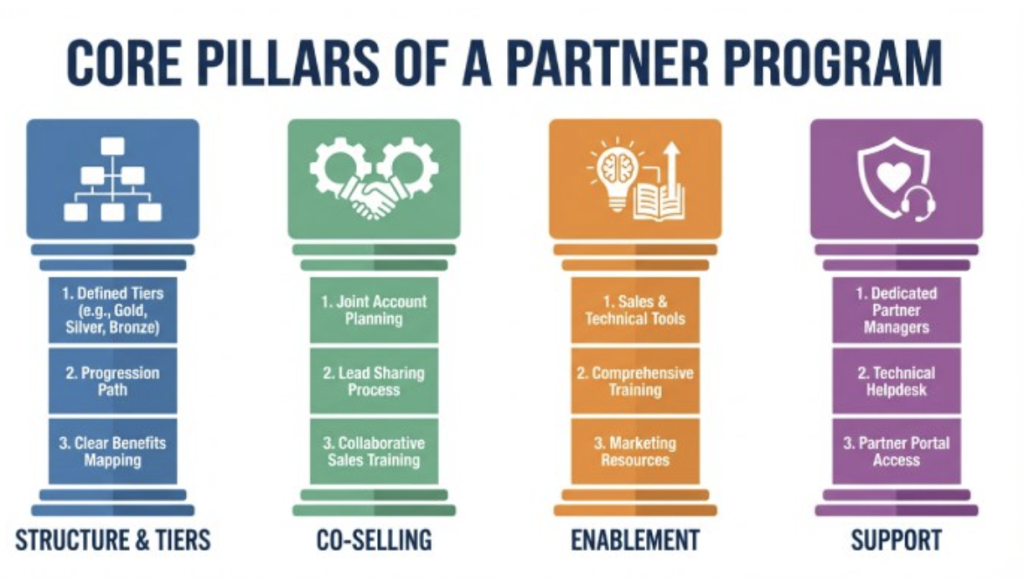
a. Deal Registration, Co-Selling, and Marketplaces
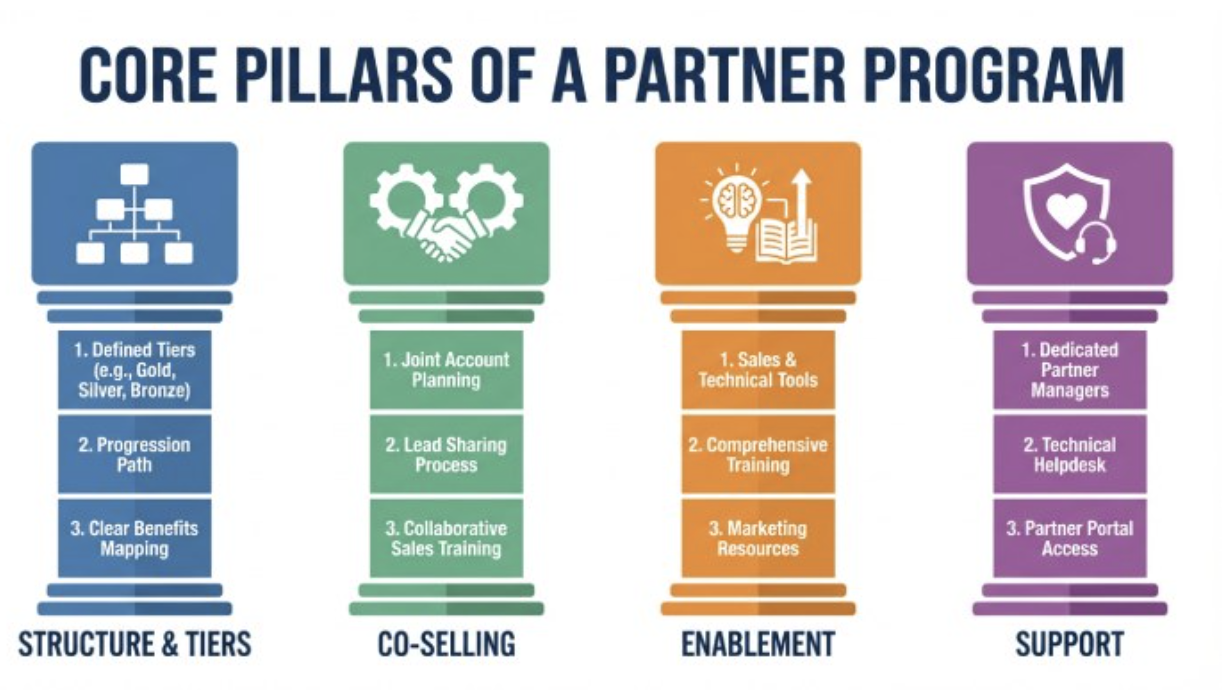
AWS’s deal registration and co-selling initiatives harmonize the interests of partners and vendors, significantly minimizing channel friction and creating a more efficient journey from identifying opportunities to finalizing deals. By utilizing these programs, Managed Service Providers (MSPs) can enhance their visibility into joint sales pipelines, boost win rates through collaborative selling strategies, and gain access to AWS’s field resources.
Moreover, presenting solutions in the AWS Marketplace streamlines the procurement process for customers by offering pre-approved, consolidated purchasing options while facilitating outcome-oriented solutions that merge managed services, migration, and modernization into a cohesive transaction model.
b. Technical Enablement and Training
Effective technical enablement, provided through organized training sessions, interactive workshops with AWS specialists, and detailed resources from the MSP Program Guide, enhances partner skills and builds technical knowledge. Ongoing collaboration with Partner Development Managers refines strategies, addresses skill gaps, and accelerates the development of solutions.
Furthermore, platforms like Partner Central serve as a centralized resource for release notes, technical information, guidance resources, and field communications, ensuring that partners remain in sync with AWS innovations and are well-prepared to offer high-quality, current solutions.
c. Enterprise-Grade Support and Operations
Top-tier Managed Service Provider programs prioritize enterprise-level support and operational excellence by providing round-the-clock access to expert guidance, adopting Site Reliability Engineering (SRE) practices, and deploying secure, automated infrastructures. These programs enforce strict standards regarding service level agreements, compliance with regulations, and governance of change management, ensuring reliability, scalability, and consistency throughout the cloud lifecycle. This systematic approach guarantees that customers receive seamless service at all times.
Expanding Services and Revenue Through Partnerships—new offerings, faster time-to-market, margin protection, customer outcomes
Distinctive New Offerings
An effective MSP partner program delivers high-value services, including managed data platforms, FinOps, AMIs, AI/ML MLOps, and tailored industry accelerators. These services enable providers to excel in competitive landscapes and meet intricate customer demands with ready-made solutions.
Accelerated Market Entry
Utilizing ecosystems like the AWS Partner Network and the AWS Managed Services Provider Program allows organizations to tap into co-selling opportunities, financial assistance, and established market strategies. This dramatically reduces the time required to launch new services, empowering partners to enter the market quickly and confidently.
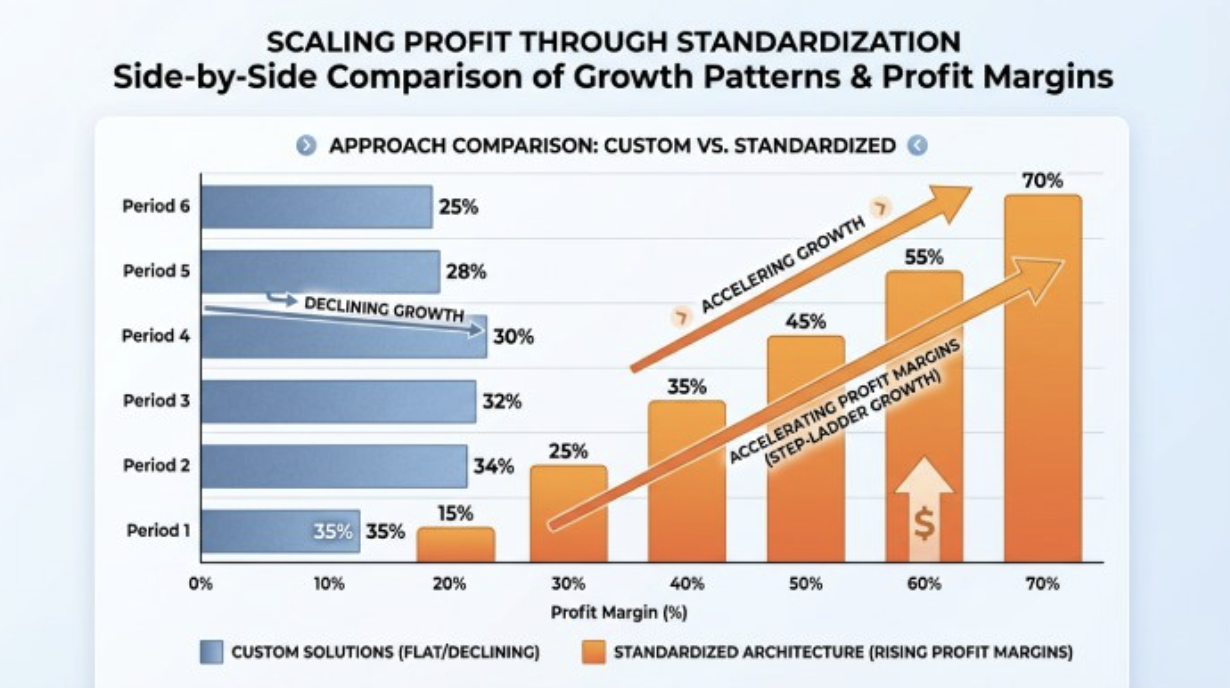
Margin Assurance Through Standardization
By employing standardized architectures and repeatable delivery methods, MSPs can sustain healthy profit margins. Instead of creating unique solutions for every client, partners can efficiently scale their offerings while ensuring consistent quality and reliable profitability.
Verified Success Across Sectors
Partnership success stories showcase transformative real-world applications. For instance, Opti9 integrates disaster recovery with compliance controls for secure regulated workloads, while Capgemini and Data Reply facilitate worldwide cloud migration. TekStream and eCloud Valley leverage validated AWS MSP credentials to streamline intricate migrations and cut costs. EPI-USE upgrades SAP environments for institutions like Louisiana State University, while Aston Martin innovatively merges performance metrics with digital experiences. Even specialized providers like Evosus enhance their services without overstressing internal resources.
Smoother Processes and Quicker Value Extraction
Bundling solutions in the AWS Marketplace and aligning them with enterprise standards minimizes procurement hurdles and hastens decision-making. Clients can rapidly recognize value through efficient deployment and clear pricing structures.
Enhanced Customer Success and Revenue Expansion
The outcome is evident: greater cost-effectiveness, increased customer satisfaction (NPS), and a steadier, long-term revenue stream supported by multi-year managed services contracts.
Making Partnerships Work—selection criteria, onboarding, tool and process integration, governance, joint GTM, service delivery alignment
1. Selection and Onboarding
Set partner selection criteria that map to strategic growth vectors—industries, geographies, and solution gaps. During the application process, run a structured self-assessment against the MSP Program Guide, then assign a partner development manager to orchestrate onboarding. Use calibration guides to define certification plans, automation priorities, and audit timelines leading to technical validation and, ultimately, a validated AWS MSP designation.
2. Integration and Alignment
a. Tooling and Process Integration
Align ITSM, CMDB, observability, backup, and security tooling. Define RACI for runbooks, SLOs, and shared KPIs to keep service delivery predictable through cloud migration phases. Standardize IaC, drift detection, and automated remediation to sustain secure, automated solutions at scale.
b. Joint Go‑To‑Market and Marketing
Codify go-to-market support with shared ICPs, competitive plays, and marketing campaign assets. Activate co-selling opportunities, ensure priority placement in AWS solution maps, and pre-stage offers in AWS Marketplace. If you’re exploring email security or complementary routes, evaluate a specialized MSP partner program to extend reach without diluting focus.
c. Governance and Operating Rhythm
Stand up a joint steering committee, monthly pipeline reviews, and quarterly business reviews (QBRs). Track utilization of funding benefits, MDF burn-down, and attach rates for migrations and modernization to maintain momentum and transparency.
Measuring Impact and What’s Next—KPIs, QBRs, mitigating channel conflict, and emerging trends (AI, marketplaces, security)
KPIs and QBR Cadence
Measure what matters:
-
- The success of cloud migration can be gauged by how quickly the migration is carried out, the reliability and quality of the transition processes, and how well costs are managed in the post-migration phase.
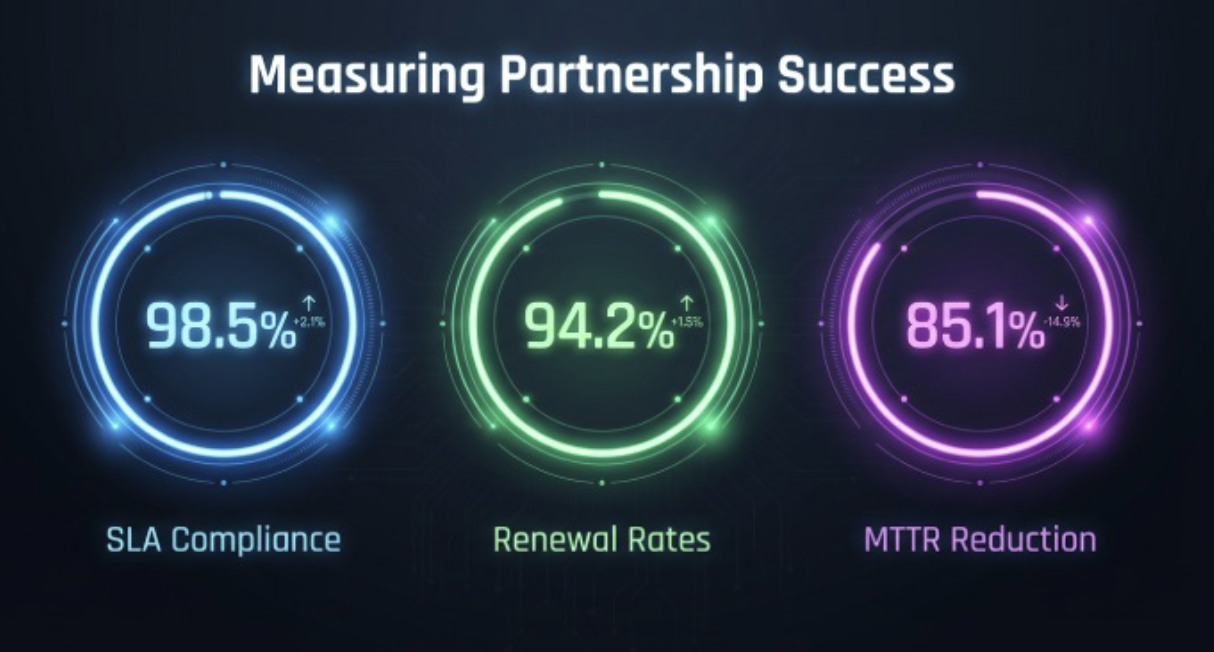
- Long-term value derived from managed services is reflected in renewal rates and net revenue retention, which demonstrate customer satisfaction, loyalty, and steady revenue growth.
- The rates at which technical validations are passed, along with the time taken to address audit issues, indicate the service provider’s efficiency, readiness for compliance, and operational maturity.
- The pipeline generated via the AWS Partner Network, in conjunction with revenue from AWS Marketplace and bookings influenced by co-selling, underscores the success of partner-driven growth strategies and collaborative market approaches.
- The assessment of service delivery is based on compliance with service level agreements (SLAs), a decrease in mean time to resolution (MTTR) for incidents, and the level of automation integrated into operational processes.
Use QBRs to reconcile plan vs. actual, refine funding benefits allocation, and prioritize technical enablement and go-to-market support where the data shows the biggest gaps.
Channel Health and Conflict Mitigation
Establish deal registration norms, escalation paths, and clear segmentation to avoid overlap. Transparent incentives, documented program benefits, and Partner Central hygiene reduce surprises. Where conflicts arise, lean on the partner development manager to reset rules of engagement and protect customer outcomes.
The Road Ahead: AI, Marketplaces, and Security
AI-powered operations, generative runbooks, and predictive scaling will redefine technical enablement and service delivery. Expect technical validation frameworks to expand into model governance and data residency. Marketplaces will keep growing as the preferred buying center, making packaging and pricing discipline essential. Security remains non-negotiable: zero trust, posture management, and continuous compliance-as-code will be table stakes for any Managed Services Provider aiming to lead. Within Amazon Web Services and the AWS Partner Network, those who combine disciplined execution, modern automation, and collaborative go-to-market support will convert today’s demand into durable business transformation.
Partner programs for Managed Service Providers (MSPs) emphasize that collaboration is now a critical component of strategic success. By merging their skills, tools, and resources, service providers can offer more robust solutions, speed up innovation, and confidently respond to shifting customer needs. These alliances not only enhance service offerings but also establish a framework for reliable quality, scalability, and sustainable growth.
At the heart of this transformation is the enhanced value provided to clients. Strong partnerships among MSPs facilitate quicker resolutions, better performance, and quantifiable business results, all while ensuring operational efficiency and protecting profit margins. In a highly competitive IT environment, those who adopt partnership-driven strategies will be best equipped to adapt, prosper, and lead the way.