This is not a romantic story about climbing. It is a look at real lives on the mountain, and how their work shapes every moment of Climbing Mount Kilimanjaro.
The First Light on the Mountain

The day starts long before climbers wake up. Long before the first cup of tea reaches your tent, the mountain team is already moving.
Guides check the weather, read the wind, and scan the early clouds for signs of trouble.
Porters gather the loads, balancing weight with practiced instinct. Cooks prepare the morning meal in cold air that bites the hands.
You may think you wake up on Kilimanjaro, but in truth, you join a day that has already begun without you.
What Guides Really Do on a Kilimanjaro Climb
Guides are more than navigators. They watch your breathing, your pace, and the small changes in your energy. A good Kilimanjaro Climbing Guide can tell something is wrong long before you notice it. They know when to slow the group and when to encourage one more step. Their decisions shape the success of the entire Kilimanjaro Climb.
Every landscape increases its responsibility. The rainforest is slippery. The moorland tests your lungs. The alpine desert drains your strength. Near the top, where Kilimanjaro Height begins to feel real, they switch from guiding to protecting.
There are moments when climbers doubt themselves, but there are also moments when guides carry that doubt for them.
The Porters Who Carry More Than Gear
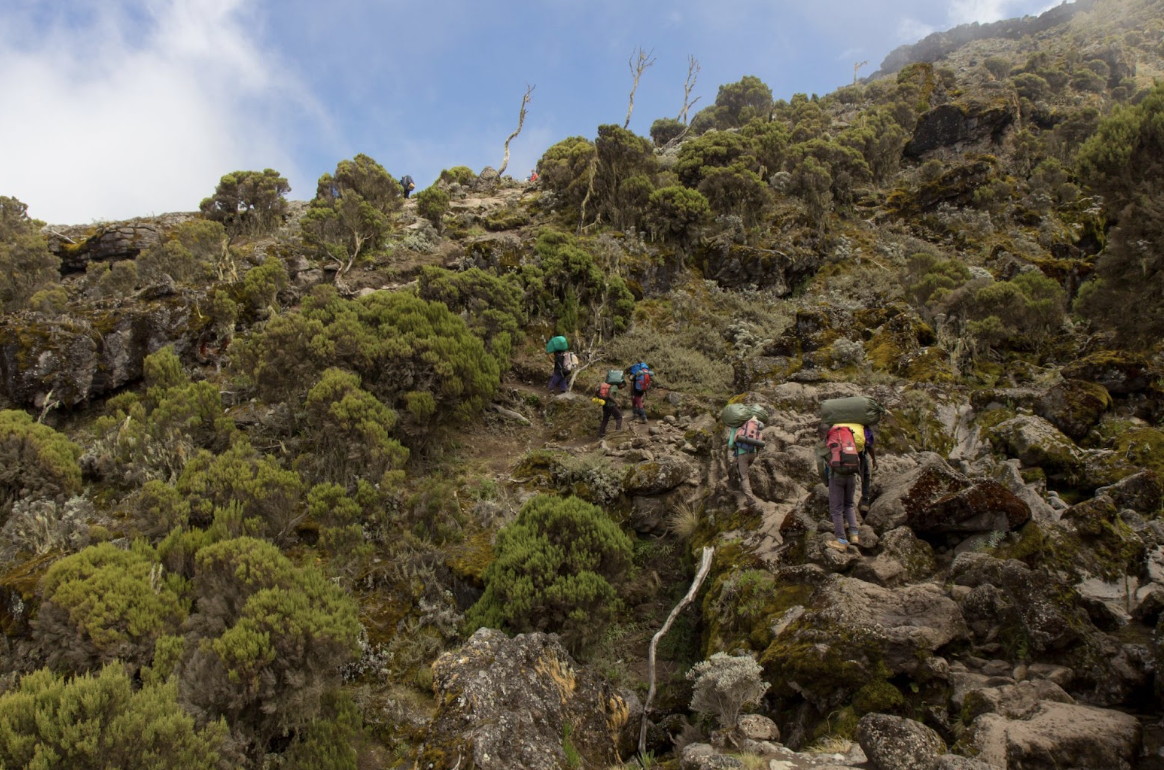
Most people know the obvious fact: Kilimanjaro Porters carry the heaviest load. What they may not know is the rhythm and discipline behind that work.
Porters leave the camp after the climbers but reach the next camp first. They secure tents, collect water, set up toilets, and make sure everything is ready by the time you arrive.
Their days are long. Their pace is steady. Their knowledge of the Mt Kilimanjaro Climbing Routes is unmatched. On routes like the Lemosho Route, Machame Route, Rongai Route, or the long Northern Circuit, porters memorize every turn, every loose stone, and the safest way to move with heavy loads.
They also carry morale. A smile at Shira Camp, a joke at Barranco Wall, a short cheer before summit night. They hold the emotional weight of the climb just as much as the physical one.
The Camp Life That Keeps Climbers Moving

Camp life is a world of its own. Cooks turn simple ingredients into warm meals that fuel the ascent. Water crews hike to streams to fill containers for drinking, cooking, and washing. Tent teams repair pegs, tarps, and zippers worn by harsh winds.
You may eat porridge in ten minutes, but someone woke before dawn, boiled water in thin air, and guarded the flame against mountain gusts.
The quieter work holds the entire climb together.
The Emotional Backbone of the Climb
Every team member has a story. Some have guided for decades. Some have summited hundreds of times. Some send money home to families. Some dream of becoming guides themselves one day.
Their emotional strength influences your climb more than you realize.
A porter notices you struggling and takes your daypack without saying a word. A guide tells a story during dinner that calms your nerves for summit night. A cook brings ginger tea when altitude nausea hits you suddenly.
These moments are not part of any brochure about Mount Kilimanjaro Climbing Tours, but they become the memories that stay longest.
Skills That Are Never Seen but Always Felt
A climb on Mount Kilimanjaro Routes depends on skills most climbers never witness:
- How a guide evaluates early signs of altitude sickness
- How porters judge safe walking distance when carrying heavy loads
- How cooks adjust meals when your appetite disappears
- How teams communicate silently when the weather shifts
- How rescue procedures activate when a climber cannot continue
This is why even a Solo Kilimanjaro Climb does not truly mean climbing alone. And it is also why questions like “Can You Climb Kilimanjaro Solo” often miss the mark. Safety grows from teamwork.
The End of the Day and the Weight of the Mountain
When you sleep, the team continues working. Frozen tents must be tightened. Cooking equipment cleaned. Gear secured for the cold night. The mountain never entirely rests, and neither do the people who support you.
Only when the final meal is served and the last climber settles into their tent does the team finally sit down. This is their brief moment of quiet before another early morning begins.
The Kilimanjaro Climbing Cost, the timings, and the choices make sense only when you see the human work behind them. You are paying for safety, care, endurance, and lives dedicated to this mountain.
Conclusion
A successful Climbing Mount Kilimanjaro experience is not built on gear or training alone. It is built on people. The guides, the porters, the cooks, the water crew, the summit team. They create the rhythm that allows climbers to focus on their own steps. They make adventure possible. They carry more than their weight. They have the spirit of the mountain.
Understanding their daily life changes how you see the journey. It turns the climb from a personal goal into a shared achievement. And maybe that is the real meaning of Mount Kilimanjaro.
Start Planning Your Mount Kilimanjaro Climbing Journey.