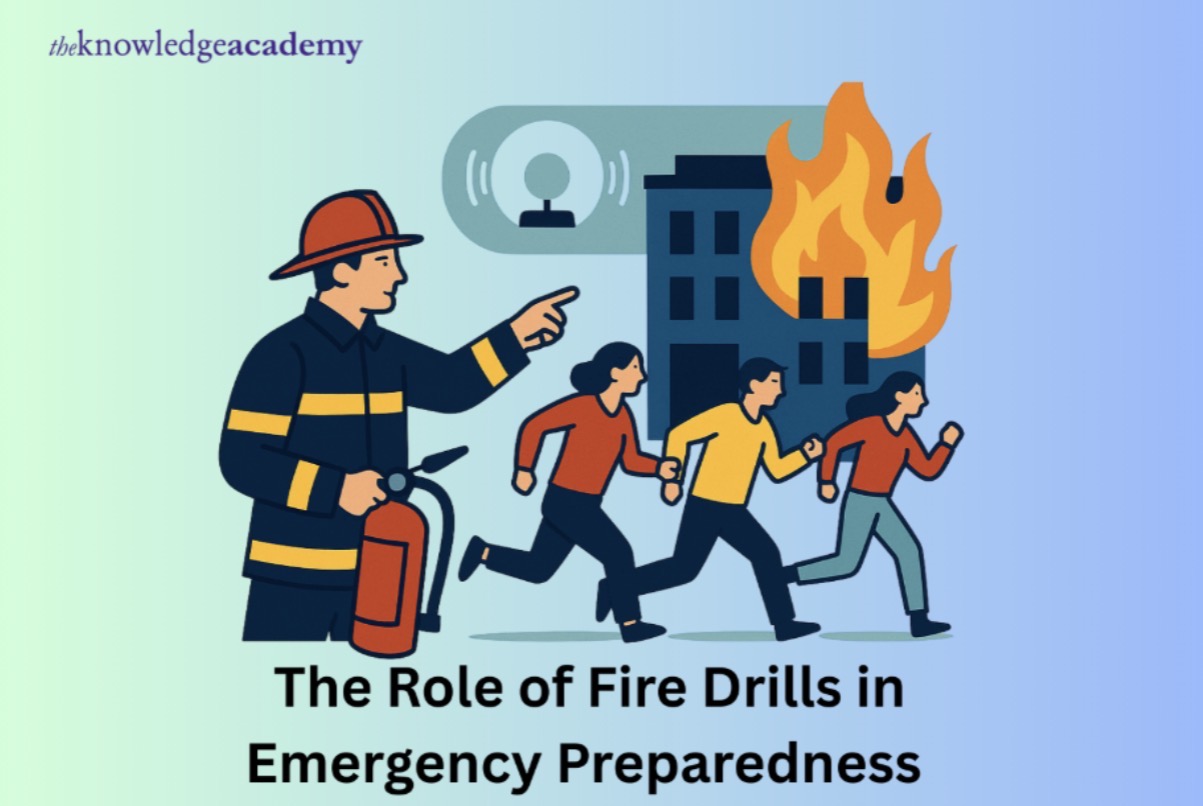
When we talk about Fire Safety Training, most people think of fire extinguishers and alarms. Yet, one of the most effective ways for saving lives is often overlooked: fire drills. These practice runs show us exactly how to react when danger strikes. If you have ever wondered What is Fire Safety, it goes beyond knowing the basics. It is about being prepared to act without hesitation.
In this blog, we will explore why fire drills matter, how they are carried out, and the vital role they play in keeping everyone safe.
Table of Contents
- How Fire Drills Strengthen Emergency Preparedness
- Conclusion
How Fire Drills Strengthen Emergency Preparedness
Below are the key ways fire drills strengthen preparedness and keep everyone protected:
Practicing Real Situations Saves Lives
A fire drill is more than just a standard practice. It allows people to practice making a safe and speedy escape by simulating a potentially fatal situation. It is hard to think clearly when in a panic. Fire drills help people understand procedures by making them instinctive, which is why many organizations rely on Fire Watch Guards in Detroit to ensure drills and safety measures are properly conducted. These drills offer everyone the confidence to react coolly and effectively, whether in offices, hospitals, or schools. Even the best fire safety equipment might not be used appropriately when it’s most needed if you don’t practice.
Building Confidence Through Repetition
It takes more than one fire drill to prepare people. Confidence is developed via consistent practice. Regular drill participants, whether staff or children, are immediately aware of the closest exits, assembly locations, and safety procedures. In actual circumstances, this familiarity eliminates fear and helps avoid expensive errors. Additionally, repetition aids in identifying evacuation plans’ weak points so that they can be strengthened before a disaster.
Strengthening Team Coordination
In times of crisis, cooperation can mean the difference between safety and mayhem. Coordination between people, leaders, and safety officers is promoted by fire drills. Whether it’s directing others, making sure those who are vulnerable are secure, or reporting to specific locations, everyone learns their duty. In addition to improving communication, group practice ensures that no one is left behind. This cooperation fosters a culture in the workplace where fire safety is taken seriously.
Identifying Weaknesses in Safety Plans
Another useful instrument for evaluating the efficacy of emergency protocols is a drill. Occasionally, pathways are packed, alarms go off, or exit doors are blocked. These problems are revealed in a safe environment during a fire practice, giving time for remediation. While offices may find evacuation takes longer than anticipated, schools may find younger children require more supervision. These lessons are priceless because they enable organizations to make changes before lives are lost.
Connecting Drills with Broader Training
You shouldn’t think about a fire drill as a one-time thing. It functions best when paired with more comprehensive education. People can learn how to help those who are unable to move fast, how to use extinguishers, and what to do when the smoke is thick during training sessions. When taken as a whole, these initiatives demonstrate that fire safety is a comprehensive process that involves knowledge, action, and preparedness.
Encouraging a Culture of Responsibility
Fire drills foster an attitude that views safety as a shared responsibility rather than merely a regulation. People are more inclined to follow leaders who demonstrate a serious approach to drills. Everyone does their role because of this shared feeling of accountability. Drills gradually create a culture in which fire safety is viewed as a top concern rather than a secondary one.
Preparing for Different Fire Scenarios
Every fire emergency has a unique appearance. Some begin in electrical panels, storage spaces, or kitchens. By simulating various scenarios, fire drills can help people learn how to adjust to shifting circumstances. Participants are ready for challenges like smoke-filled hallways, blocked exits, or helping those with mobility issues by rehearsing a variety of scenarios.
Conclusion
Fire drills are crucial to developing effective disaster preparedness; they are not just a fast exercise. They teach people how to maintain composure and save lives in emergency situations. These exercises guarantee that safety becomes second nature when paired with organized fire safety instruction. The Knowledge Academy offers free resources required to put awareness into action for anyone who is keen to improve their knowledge and abilities.