With the explosion of ecommerce stores and other online businesses, accurate data has increasingly become a business necessity rather than a luxury.
The right data helps business owners and executives make the right decisions at the right time, helping push the company to new heights.
But all too often, data accuracy breaks down between levels in your organization.
Maybe everyone is accessing the same original data, you’re using data replication, but filters, time frames, and assumptions vary between stakeholders, leading to confusion and wrong information.
Luckily, there’s a simple strategy to solve this problem: establishing a single version of the truth.
By developing and implementing this strategy, you’ll eliminate data communication problems and ensure that you’re always making decisions based on the right version of the truth.
In this article, we’ll cover what a single version of the truth is, why it’s so important for sales teams, and how to develop one for your business.
What is a single version of the truth?
A single version of the truth (SVOT) is an agreed-upon way of looking at data that everyone in an organization will take as fact.
It’s how stakeholders across teams or partnerships guarantee they are all looking at identical information so they can make effective, data-driven decisions.
For instance, your organization may decide to count video views separately from all pageviews, as in this Google Analytics view example.

Or, perhaps you’re trying to calculate week-over-week growth. A single version of the truth defines the start and end of a week, so everyone makes the same comparison.
Single version of the truth vs. single source of truth
It’s easy to assume that a single version of the truth is exactly the same as a single source of truth, but there is an important difference.
Single source of truth refers to how companies collect and store data, so everyone in a company can access the same raw information.
Single version of the truth refers to how that data is viewed for the purpose of making business decisions. It might include certain filters, variables, or calculations that help everyone see the data in the same way.
Although all data will come from a single source of truth, the way this data is packaged and presented is the single version of the truth.
Why is SVOT important for sales?
A single version of the truth is important at all levels of an organization, but it holds particular importance for the sales team.
Because the sales team is so integral to your company’s revenue operations, it’s critical that their data is accurate and matches what higher-ups in the company need to see.
Everything from leads to sales to revenue needs to be tracked consistently and accurately. To make things as easy as possible for your business, it’s good practice to make sure your sales team uses the single version of the truth as much as possible.
Keep in mind that most departments in your business will need to use sales data for their own work. For instance, marketing teams use sales data to target campaigns and optimize conversion rates. Human resources may use sales data to forecast hiring needs in busy periods.
And, of course, sales data is the core of how well a business is performing, which is essential to making decisions about the future of a business.
How to develop a SVOT for your sales team
Now that we’ve covered why a single version of the truth is so critical for your sales team and business, let’s look at how to develop one internally.
By following these steps, you can have a single version of the truth for your entire business up and running soon.
Outline your sales process
The single version of the truth for your sales team starts with understanding your sales process.
Whether you’re building a sales process for the first time or just looking to make some adjustments, it’s important to have clear documentation of all the steps a customer will undergo, from becoming aware of your business to closing the deal.
Here are a few elements your sales process outline should consider:
- How will customers first become aware of your product or service?
- How many touchpoints or interactions will your typical customer go through before making a purchase?
- How many channels are you using?
- At what point does a prospect become a lead?
- What action closes a deal or sale?
A sales process outline is important because it helps you understand all the data your sales team will generate. From there, you can decide what data is most important to include in your single version of the truth.
Identify your sales KPIs
Decide what data points will serve as key performance indicators, or KPIs, for your sales team.
For instance, do you want to track the number of qualified leads each month? What about conversion rate or even lost sales?
You may need to consider several layers of your organization when determining your data needs. The sales team may need certain KPIs for assessing performance or selecting strategies, while the final numbers are what leadership uses to make decisions.
Here are a few types of sales KPIs you might consider tracking:
- Leads: qualified, unqualified, by channel, by industry
- Sales: by channel, by percent growth
- Conversion rate: overall, by channel, prospect-to-sale, lead-to-sale
- Revenue: total revenue, average order value
- Customers: new customers, returning customers, lifetime customer value and data-driven ICP (Ideal Customer Profiles)
At this stage, it’s also important to think about what channels and sources you’ll use for your sales data.
For example, you may want to filter out spam referrals or omit leads from a defunct website.
You’ll also want to know where to source your data from. Will it come from Google Analytics? A sales-specific analytics tool?
The data source and data filters are key ingredients to building your single version of the truth.
Choose the right tools
Since a single version of the truth is all about consistency and identical information, using the same tools across the organization is a must.
A lot of analytics tools and sales software will allow you to connect different accounts and tools to pass data between them. For instance, you can use an analytics platform that directly sources data from your own CRM to avoid losing anything in translation or transfer.
Because a single version of the truth is all about data, an analytics platform where you can create a custom dashboard is perhaps the most important part of choosing the right tools.
However, the tools you use to source that data also matter. Ideally, you’ll use as few tools as possible to streamline your data collection and analytics process to eliminate redundancies and errors. Some companies even evaluate if they should build or buy software tools for their daily needs.
Whatever combination of tools you use, you’ll likely need the following kinds of features:
- CRM: A customer relationship management tool helps track sales data like prospects, leads, and conversions. It can track leads by channel or other segments and works well for marketing and support teams.
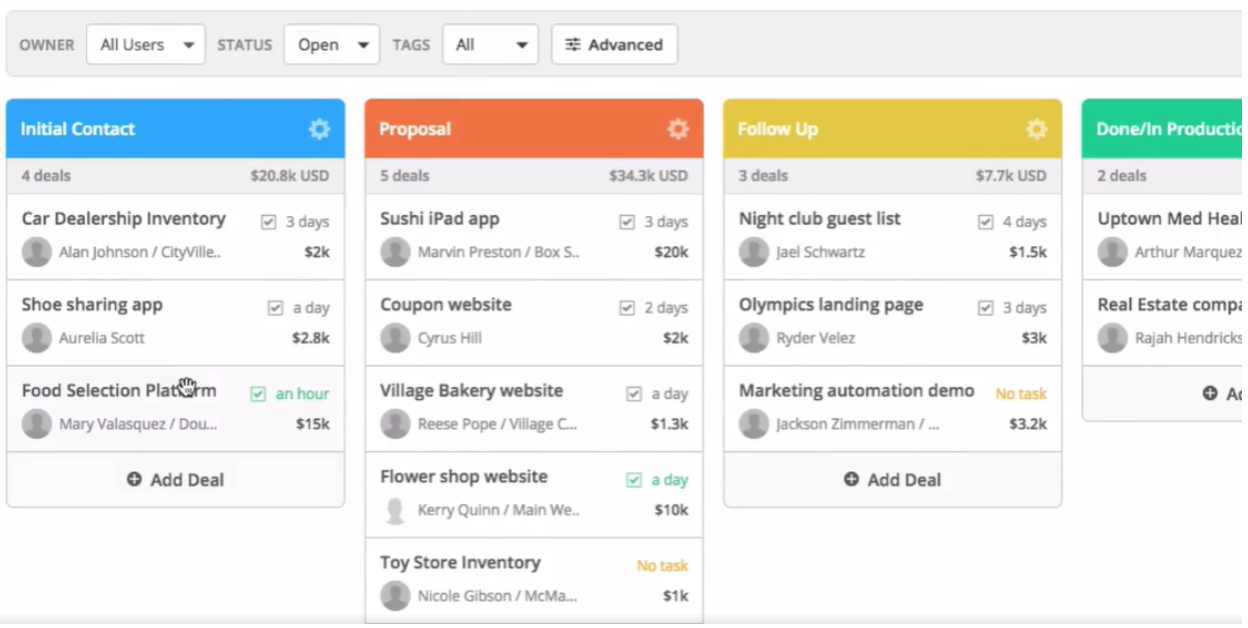
- Easy-to-learn: Because everyone in your organization may need to access your single version of the truth at some point, it should live in a tool with a gentle learning curve.
- Permission-level access: It’s smart to lock your SVOT view so only select managers or employees can edit the view, but everyone else can read the data at any point. This way, you’ll avoid accidental changes that create big data problems down the line.
- Customizable: You’ll want as much flexibility as possible to hone in on the right data view for your business and adapt to any changes down the line. It also allows all teams to use the same tool for analytic needs, streamlining workflows and increasing productivity.
Consider investing in tools that can grow along with your business. If you reach the limits of your chosen analytics tool during a large growth period, switching data sources can be a huge headache, and you risk ending up with major data problems.
Build a custom dashboard
A customized analytics dashboard is an ideal final form for a single version of the truth in many organizations.
You can build a custom dashboard in many cloud-based workflow software tools, which can instantly and automatically update your data based on the sources you’ve identified.
Most dashboard tool allow you to assemble a series of widgets that display data in your preferred format.
This is where you’ll need to finalize your views and filters for your single version of the truth.
Here are a few factors to consider when building your SVOT dashboard:
- Display format: Will you use pie charts, bar graphs, or line graphs?
- Absolute and relative values: What data should be presented as a percentage or in a comparison?
- Time frame: Will you compare data day-over-day, week-over-week, or month-over-month? Can viewers change the time frame at all?
Be sure to gather feedback from all key stakeholders and major decision-makers before finalizing your single version of the truth. Because changing your authoritative data can cause huge problems down the line, you want to avoid making changes to the single version of the truth as much as possible.
Train employees to use the SVOT
An important but overlooked step in implementing a single version of the truth is hiring and training employees to use it correctly.
Once the single version of the truth dashboard is finalized, share it with every single employee that works with data, even if only minimally.
You can offer the training on a team-by-team basis, delegate it to managers, or create a brief video training or tutorial.
No matter what your approach, it’s important that all your employees understand the following points about the single version of the truth:
- The SVOT is what the entire company accepts as fact for decision-making
- How to access the SVOT
- What each component represents
- How to access or create other custom views for specific business needs
You can also put together an FAQ or Wiki to provide refreshers or additional information for team members.
If you ever need to make changes to your single version of the truth, make sure everyone is aware of it so they can keep using the data correctly.
Build your SVOT starting now
Sales data is the backbone of a company’s analytics. A single version of the truth helps make sure the entire organization uses only the most accurate data to make decisions.
By understanding your sales process and KPIs, you can develop a SVOT for your company through analytics and/or CRM tool.
Make sure to consult all key decision-makers as you finalize your company’s single version of the truth. Once all employees are trained, you can rest easy knowing you’re making decisions with the best possible data.