In July 2006, IEEE 802.3 established the Higher Speed Study Group (HSSG) to define the objectives of the standard. In December 2007, HSSG was officially transformed into IEEE 802.3ba task force, whose task is to formulate the next generation Ethernet standard to realize 100 Gb/s and 40 Gb/s data rates on optical fiber and copper cable. In September 2008, the IEEE 802.3 task force interim meeting approved IEEE P802.3ba draft 1.0. The Physical layer specification and working principle of IEEE P802.3ba will be analyzed below.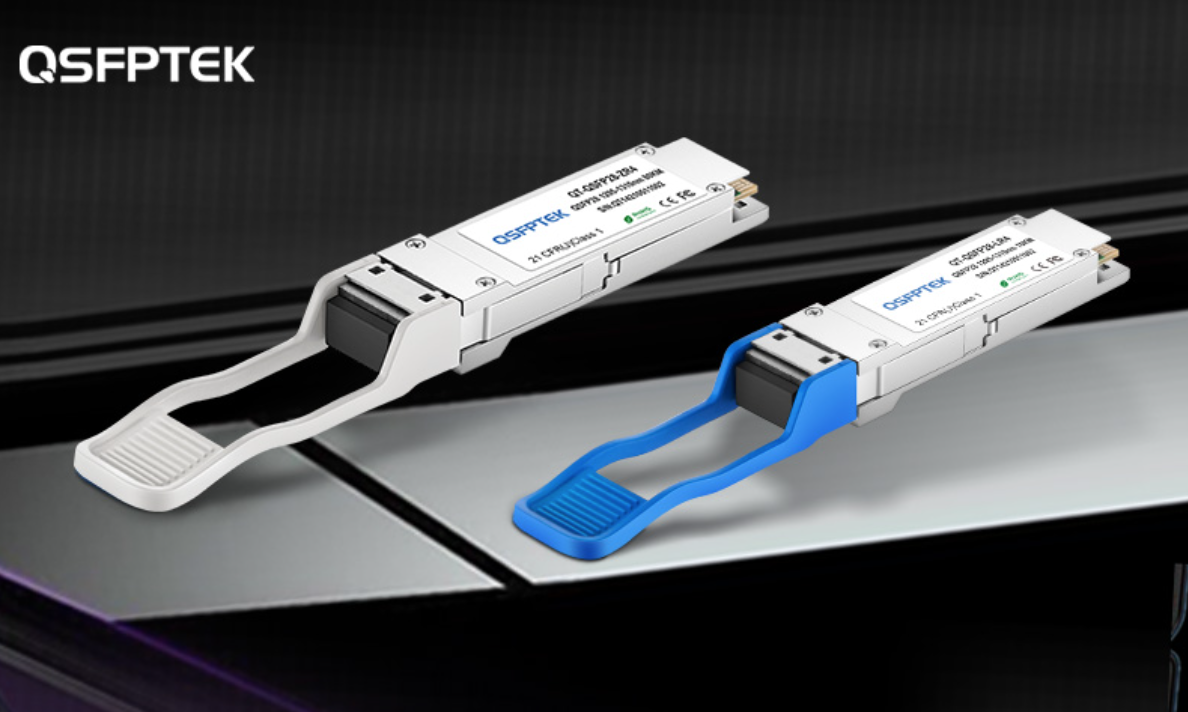
Physical Interface and PMD characteristics
A careful analysis of the application differences between 40G and 100G Ethernet is helpful to understand the starting point of the working group’s formulation of physical layer specifications. For computing applications, the application target distance of copper wire or optical fiber solution is about 100m, which is used to connect components inside the server cluster, such as in-rack cabling, blade storage, inter rack communication, and storage network (SAN). Network applications are convergence links, data centers, service providers, interoffice and interoffice connections.
40GBASE-KR4
The physical media-related characteristics support 40Gb/s bidirectional transmission in 4 pairs of channels on the printed board. Combined with the structure of 10GBASE- KR4, it has used multi-channel and defined PMD.
40GBASE-CR4 and 100GBASE-CR10
40GBASE-CR4 physical media related characteristics support transmission on 4 pairs of copper twisted pair pairs with 40G /s rate in each direction. The relevant characteristics of 1000GBASE-CR4 physical media support the transmission of 1000Gb/s in each direction on 10 pairs of copper twisted pairs. The above two specifications inherit the structure of 10GBASE-KR4. It has used multi-channel and defined PMD.
40GBASE-SR4 and 100GBASE-SR10
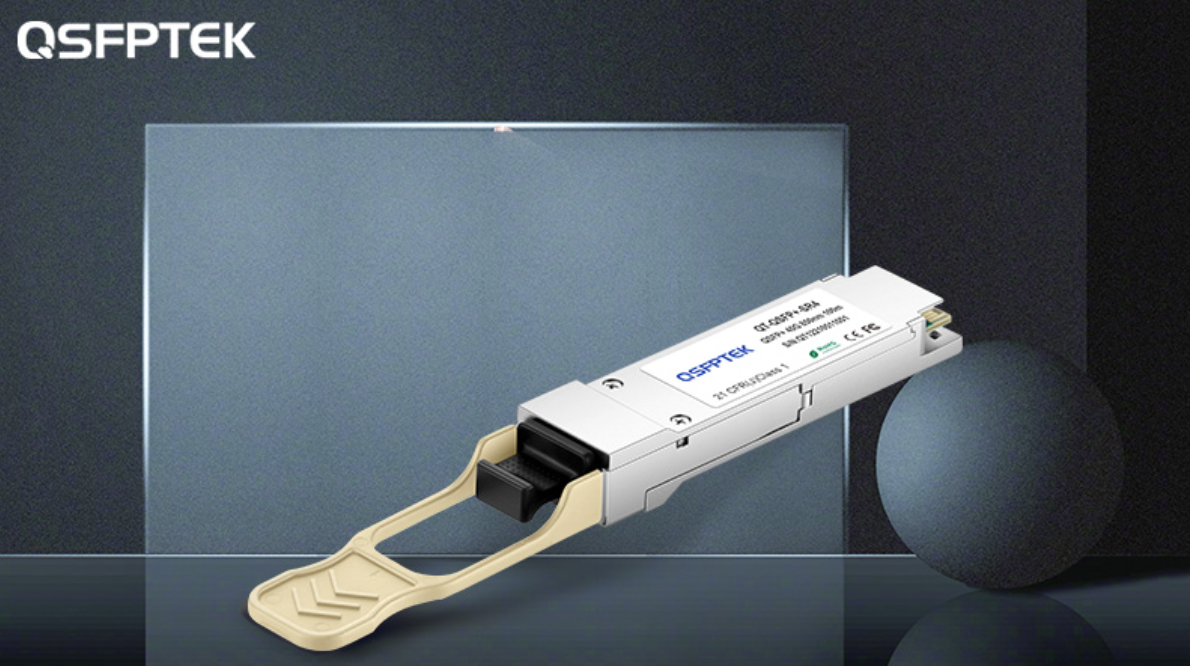
This specification is based on 850nm laser technology and supports the transmission on OM3 multimode fiber up to 100m, with a rate of 10Gb/s per channel. Therefore, 40GBASE- SR4 PMD supports 40Gb/s Ethernet data transmission and uses four parallel OM3 multimode fibers in each direction, while 100GBASE-SR10 PMD needs to use 10 OM3 multimode fibers in each direction.
40GBASE-SR4 and 100GBASE-SR10 interfaces are based on parallel optical fiber technology and use 50/125μm OM3 multimode fiber, 850nm vertical-cavity surface-emitting laser array (VCSEL Array) is selected as the light source, which balances the performance and system cost. The effective mode bandwidth (EMB) of multimode fiber is required to reach 2000MHz Km. At the same time, the total connector loss on 100m multimode optical fiber link is limited to 1.5dB, and the delay difference (Skew) of the parallel optical channel has not been finally determined by the working group, but it can be roughly estimated by referring to the 0.75ns requirements of Infiniband (4x DDR) parallel optical fiber system.
40GBASE-LR4
40GBASE-LR4 is based on 1310nm coarse wavelength division multiplexing (CWDM) technology and supports transmission up to 10km on single-mode fiber. The frequency interval is based on ITU-T G694.2 specifications, using 1270, 1290, 1310, and 1330nm wavelengths. The rate of each channel is 10Gb/s, and 10G PMD technology can be fully reused. Therefore, 40GBASE-LR4 PMD supports the transmission of 40Gb/s Ethernet data at four wavelengths and one single-mode fiber in each direction. At the interim meeting of the task force in September 2008, it was determined that the adoption of 4×10G CWDM is the basic proposal of 40G 10km single-mode fiber, and it also ends the adoption process of all basic recommendations of the task force.
100GBASE-LR4
Based on 1310nm dense wavelength division multiplexing (DWDM) technology, 100GBASE- LR4 supports transmission up to 10km on single-mode fiber. The frequency interval is based on ITU-T G694.1 specifications, using wavelengths of 1295, 1300, 1305, and 1310nm. The rate of each channel is 25Gb/s. Therefore, 100GBASE-LR4 PMD supports the transmission of 100 Gb/s Ethernet data at four wavelengths and one single-mode fiber in each direction.
100GBASE-ER4
Based on 1310nm dense wavelength division multiplexing (DWDM), 100GBASE- ER4 supports 40km (ER: Extended Reach) transmission on single-mode fiber. The frequency interval is based on ITU-T G694.1 specifications, using wavelengths of 1295nm, 1300nm, 1305nm, and 1310nm. The rate of each channel is 25Gb/s. As mentioned above, 100GBASE-LR4 PMD supports the transmission of 100Gb/s Ethernet data at four wavelengths and one single-mode fiber in each direction. In order to reach the transmission distance of 40km, the PMD of 100GBASE-ER4 adopts an optical amplifier.
Conclusion
The evolution of IEEE P802.3ba standard for 40G and 100G Ethernet was introduced, especially research on its protocol layer architecture defined and PMD specification. Learn more about 40G/100G optical products and solutions, consult QSFPTEK via sales@qsfptek.com.