Some NFL television ratings have been suffering and for a number of reasons this season, and while it seems like a perfect storm, the week 6 tie between the Seahawks and the Cardinals on Sunday night saw a resurgence that says all hope may not be lost for the league and its advertisers.
Millennials, the largest generation on our planet don’t engage well with the NFL, and unless the league does something to change it, they’ll lose a significant amount of their fanbase. As a part of their campaign to turn things around the NFL is turning to mapping.
The Current Picture
Millennials in large part don’t trust the NFL, and one study showed that 61% of them thought of the NFL as a sleazy organization, and 67% said they did not trust NFL players. Off field activity has often surfaced and damaged the reputation of stars, the teams they play for, and the NFL in general, but a more connected audience gets news even faster, and expects and even demands swift action on the part of the league.
Gaining the trust and the fandom of potentially the largest audience in history who will soon have more spending power than the baby boomer generation is essential.
Cutting the Cord
More millennials than ever are cutting the cord and ditching cable services, and the NFL is responding. NFL Mobile offers Verizon users the ability to see any game any time on their mobile devices.
Twitter and other social networks already are live streaming sporting events, and Amazon is in talks to carry others via its Prime video streaming service. Advertising agreements will need to be adjusted to this new medium, however there are some advantages.
Real-time data and demographics: Unlike television, streaming services can determine who is watching at any given time and for how long. When do they tune out?
This information can be mapped, and give marketers and the league itself information about who is watching what games and where, and what teams and matchups are expanding beyond local audiences. Ads can be targeted regionally, locally, and in a more precise way than they are through traditional television means.

Queen Mary University Research
While streaming services do not release this proprietary data publicly, researchers at Queen Mary University in London were able to roughly map the location of Netflix server locations. (See map). Traffic through each of the 233 servers reveals in large part where the largest number of viewers are at any given time.
Advertisers and networks able to monitor and analyze this traffic in real time would learn a great deal about their audiences, and the NFL wants a part of that puzzle.
Stadium Engagement
Attending a game instead of watching on television has long been about the experience more than just seeing the game itself and rooting for your team in person. More stadiums are providing wi-fi access to fans, and encouraging social media engagement through hashtags and social media pages. Sports Authority field in Denver was one of the first to offer internet access and was followed quickly by the Patriots’ Gillette Stadium where fans can even check the status of restroom lines using the in-house app.
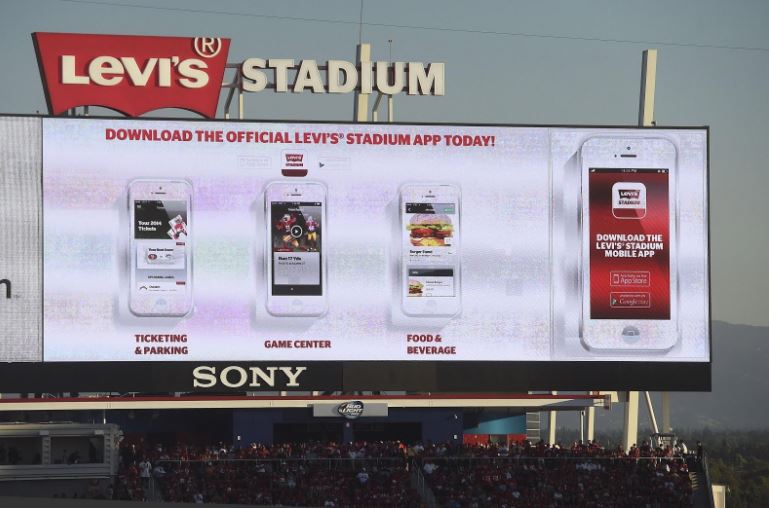
Levi’s Stadium is the most technologically advanced stadium.
Of course this kind of engagement relies on location data which shows the user what restroom they are closest to and other information tailored to the section they are sitting in. These type of proximity settings depend on precise GIS data and other sensors to function properly.
Levi Stadium in San Francisco is a premier venue not just for football with some of the highest tech features currently available, and has set the bar for features that engage fans when they attend events in person.
Sustainability
More NFL teams are hiring more “green” employees like environmental consultants, sustainable community developers, and environmental specialists. Why? Millennials care about green industry. Large stadiums use a lot of power, and thousands of fans drive there on game day. If the NFL is going to connect with its newest fans (and do what is responsible for the planet) the league is going to have to go green.

New stadiums since 2002. Courtesy SB Nation
Teams have build eleven new stadiums since 2002, The newest are not always the greenest though.
Soldier field is one of the oldest stadiums in the league, but was the first to receive LEED certification. They have set-up their operations to conserve energy and water. Soil and sod is reused, EV charging stations are prevalent, and there is an extensive recycling plan even including recycling the lost mobile phones and eyeglasses.
The Players
Of course one of the most important ways the NFL engages Millennial fans is quite simple: most of the players are Millennials themselves. Coaching is going more digital, with team alerts texted to players phones, using apps for scheduling practices, and training film is downloaded to tablets and smartphones.
More importantly to gaining fans is where the players are from. Young fans are more likely to follow players from the college they attended or one within their region. The NFL has a large fan base in the south because football is still king there. More NFL players come from Southern schools than anywhere else in the country.
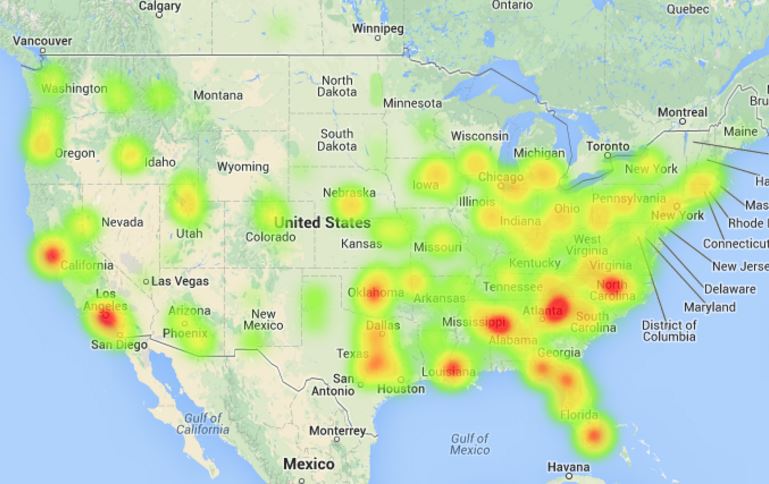
Map showing Alma Mater of NFL draft picks since 2010.
What does it mean?
What does all of this mean to league? Going mobile, getting away from cable and network contracts that are exclusive, and finding new advertising means to generate revenue are a good start.
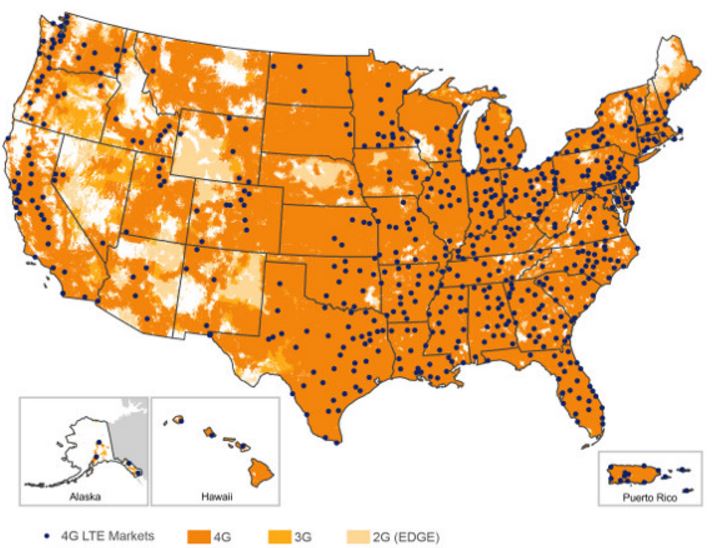
Network coverage that makes watching on your phone on the go possible. Map courtesy ATT.
Enhancing the in person stadium experience and embracing sustainability will also help. The bottom line is the NFL must become more trustworthy, transparent, and overcome the sleazy image it has. If all of these things go well, Millennials may be the next, and largest, generation yet of professional football fans.
Author:
Troy Lambert is a freelance writer, editor, and non-profit consultant by day, and a suspense thriller author by night. He learned about the power of GIS while working as a researcher at a museum, and is always looking for ways to apply this technology and big data in new and innovative ways. Troy is an avid cyclist, skier, and hiker. He lives, works, and plays in Boise, Idaho. His work can be found at troylambertwrites.com, and you can connect with him on Twitter @tlambertwrites.