Technology has advanced significantly in the last decade and more. It’s not only useful for everyday life, but it can help to fight crime too. In this article, we’re going to discuss nine different ways that police use technology to catch drug criminals.

Technology is advancing at a rapid rate and people who are concerned in the supply of class A drugs are at an increased risk of getting caught. A decade ago, police forces may have struggled to link drug crimes to suspects, but thanks to developing technologies, it’s now more possible than ever before.
So, what are the nine ways that technology is helping to catch drug criminals? Let’s take a closer look and find out more…
-
GPS Trackers
Before technology advanced and provided all the extra assistance we talk about below, there was only so many ways that criminals could be caught. Thankfully, GPS tracking has been around since the late 1900s.
If the police presume that a person is potentially involved in drug offences but cannot yet prove it, they might decide to put a GPS tracker on a suspect’s car or other personal belonging. This helps the police to gather information and intelligence that can help to build a case against the suspect. The police do, however, need the authorisation to do this. Without it, they are unable to do so.
-
I.P. Addresses
With social media becoming increasingly popular, many drug criminals are moving their services off the streets and onto popular social media apps, such as Snapchat, Instagram, and Facebook. For police, this provides them with an advantage as they can trace I.P addresses, which could lead them straight to their criminal.
-
Automatic License Plate Recognition (ALPR)
Cameras that scan your license plate when entering a car park – or another restricted area – are now being used by the police to catch criminals. The cameras are attached to their vehicles discretely.
It doesn’t just help police officers catch criminals related to drug crimes, but also many other types of crimes too, such as burglary and homicide. Recent studies have shown that they are an essential asset for catching criminals.
-
Artificial Intelligence
Although artificial intelligence may not be helping to catch active criminals, it’s helping to catch future criminals as it assists in determining drug crime patterns. AI technologies can look at previous data – that shows where and when crimes occur – to predict where and when future crimes are likely to take place.
What’s more, AI can determine what other types of technologies need to be put into place, such as patrolling areas and surveillance cameras to final catch the suspect.
-
Encrypted Apps
One perfect example of how criminals were caught by the police was through the creation of an encrypted app called AN0M.
This app was originally used by criminals as an online crime network to plan their crimes, such as murder, gun distribution and mass drug trafficking. Though it wasn’t created under the control of law enforcement, the police force managed to legally acquire it and adapted it for their use. Because of this, they were able to charge more than 200 criminals.
-
Fingerprint
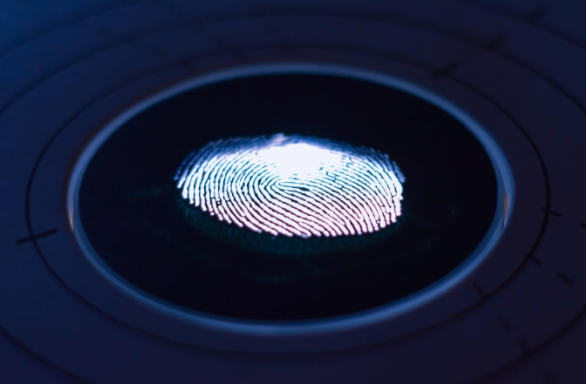
Fingerprints are often used to solve crimes and identify criminals. Fingerprints are often taken from a person when they have been arrested or those linked to crimes (such as touching evidence) in case further evidence is found in the future.
Recently, law enforcement in Wales declared that they think they might have created a future way to assist in catching criminals with the help of biometrics. In one example, someone was arrested in Bridgend after they found images on his phone of someone’s hand holding ecstasy pills.
With the help of their scientific unit, they were able to scan this onto their system and look for fingerprints. Though there was no match, in this case, fingerprint detection and biometrics have long helped to collect evidence and warrant arrests.
-
Video Doorbells
Video doorbells were initially intended to be used by homeowners to protect their properties from theft and safety reasons. Although not a technology designed for police, video doorbells have helped to capture crimes in the past, with police frequently requesting doorbell footage in areas where crimes have been committed.
-
Thermal Imaging
Not every person that the police attempt to arrest is easy to catch, but with new and developed technologies, they have more of a successful chance. With an unlimited fine and/or prison sentence for drug supply, it’s not unusual for criminals to try to escape in the hope that law enforcement won’t find them.
Infrared images are often used when perusing a criminal, either by police officers on foot or by a helicopter assisting. Officers will also have thermal imaging cameras to get an idea of where the target is so that they can easily follow them. These sorts of technologies are most used in dark situations, such as bad weather or at night.
The infrared/thermal imaging camera will detect any heat that is emitted by living objects, such as animals and humans. It will produce either a picture or a map to give officers a clear idea of the criminal’s location.
-
Drones
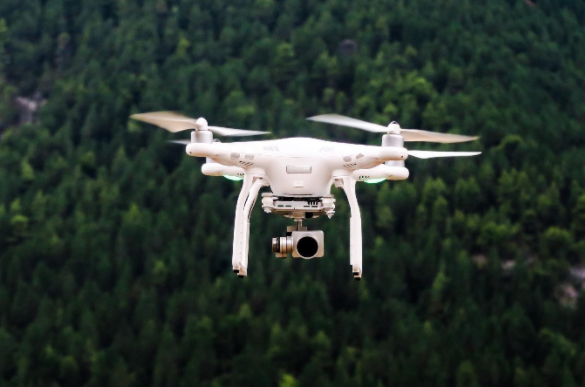
Like thermal/infrared imaging cameras, drones are often used to monitor the movement of criminals. Some can also be equipped with thermal imaging cameras.
The Law Enforcement is Advancing with Technology
To conclude, it’s clear to see that even though criminals involved in drug-related crimes are changing how they operate, but so are police officers. Bizarre technologies such as obtaining a fingerprint from a photograph or using a person’s doorbell for incriminating footage, are continuing to be used to fight crime.
Most of these technologies can be used across different areas of crime, from homicide and drug-related crimes, through to petty crime and theft. There are also other types of technology that the police use too such as biometrics, robots, and voice technology – but we’ll leave you to do your own research for that!
What do you think of the nine ways that technology is helping to catch drug criminals? Let us know if our comments down below.